The worst trades in Knicks history

The worst trades in Knicks history

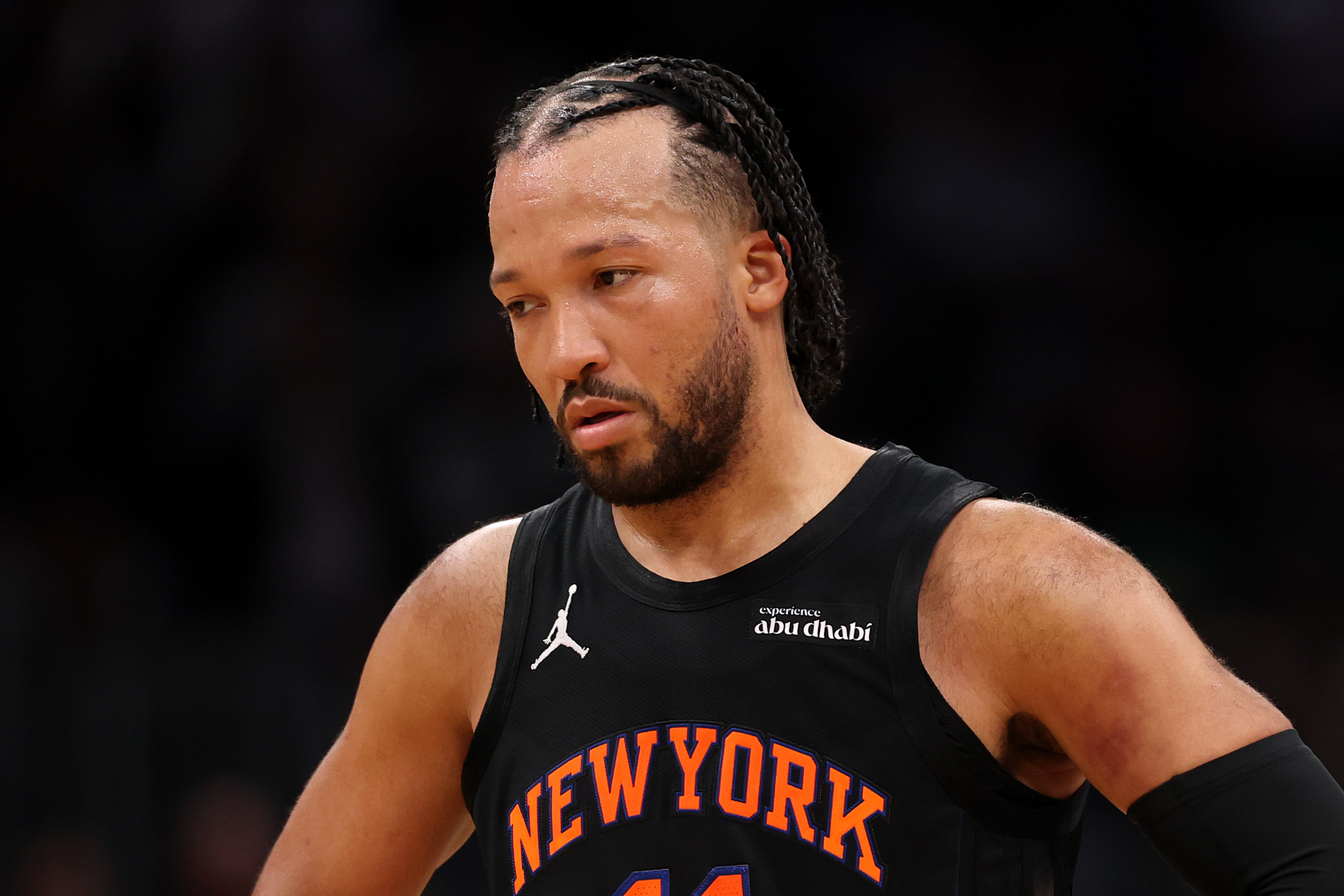
Inglewood, CA – March 09: LA Clippers forward Kawhi Leonard (2) dribbles against New York Knicks guard Jalen Brunson (11) during the second half of an NBA basketball game at Intuit Dome on Monday, March 9, 2026 in Inglewood, CA. (Eric Thayer / Los Angeles Times via Getty Images)

So… the Clippers, huh.

The year-long probe surrounding alleged salary cap manipulation ended on Wednesday and handed down one of the biggest punishments in professional sports history, suspending multiple key officials, fining the organization $30 million, and taking five first-round picks. It’s not entirely unprecedented (see: Joe Smith), but it’s pretty damn startling.

While there are many things to take away from this ruling (particularly with how Kawhi seems to have completely gotten away with this), the biggest thing might just be how unimaginably bad the Kawhi Leonard era went in LA.

To get Leonard to sign with them in 2019, the Clippers had to trade for Paul George, a trade that has gone down as one of the worst in league history due to the sheer magnitude of picks traded and how it kickstarted the Thunder’s contention window by giving them Shai Gilgeous-Alexander.

In seven years, it was disappointment after disappointment, with the highlight being a trip to the 2021 Western Conference Finals that ended in a blowout defeat at home in Game 6. George left and was replaced by James Harden; Harden left, and Leonard is choosing to return to Toronto after burning this franchise to the ground behind him.

In total, with Leonard (likely) going to the Raptors at some point, this is what the Clippers gave up for his services, both to convince him to sign and convince him to stay:

  • Shai Gilgeous-Alexander
  • Danilo Gallinari
  • 2021 MIA 1st (#18 – Tre Mann)
  • 2022 LAC 1st (#12 – Jalen Williams)
  • 2023 1st Pick Swap (not conveyed)
  • 2024 LAC 1st (#26 – Dillon Jones)
  • 2025 MIA 1st (Lottery Protected, became Thomas Sorber)
  • 2025 1st Pick Swap (Conveyed, Nique Clifford)
  • 2026 LAC 1st (#12 – Aday Mara)
  • 2029 IND 1st (voided by NBA)
  • 2030 LAC 1st (voided by NBA)
  • 2031 LAC 1st (voided by NBA)
  • 2032 LAC 1st (voided by NBA)
  • 2033 LAC 1st (voided by NBA)

Good grief.

This is, hands down, the worst trade in NBA history. It destroyed an entire franchise’s future 10-15 years for three playoff series victories in seven years. At least Billy King only messed up the Nets for five years.

It does get you thinking, though. How bad has it gotten for the Knicks? We can recall some pretty nasty trades from recent or even less recent history, but just how close do they get to the utter franchise-alteringly bad level as the Paul George trade?

Gene Shue To Detroit Fort Wayne (April 1956)

Knicks Receive: Ron Sobie
Pistons Receive: Gene Shue

We’re starting old school, back when the Pistons were still based in Fort Wayne. Before researching this, I had no clue who these guys were and would be very surprised if we had anyone in our community who’s been around long enough to remember watching them play (prove me wrong if so!)

Shue, the No. 3 overall pick in 1954, was sold to the Knicks just six games into his rookie year, but was nothing more than a regular role player in his near-two years in New York, averaging 9.2 points, 2.9 rebounds, and 2.5 assists in 1955-56.

Very shortly after the season, the 6’2” guard was dealt on draft night to Fort Wayne for Ron Sobie, the No. 7 overall pick. Sobie didn’t do much in four years, playing 191 total games and averaging 8.5 points and 4.1 rebounds before being sold to Minneapolis in December 1959, where he’d play just one more game ever.

As for Shue? He grew into his own as the Pistons moved to Detroit, being named to his first All-Star team in 1958 before getting down-ballot MVP votes over the next several seasons. He eventually grew into a 23-PPG scorer and made First-Team All-NBA in 1960. Five All-Star teams, two top-10 MVP finishes, and two All-NBA selections in six years in Detroit.

The Knicks would actually get a chance to rectify their mistake with Shue, re-acquiring him for Darrall Imhoff before the 1962-63 season, but he started to regress in his age-31 season, and he was out of basketball by the end of 1964.

While Shue never won Detroit a championship, he would’ve been a tremendous help to a Knicks team that went through its first Dark Ages prior to the 70s revival. In the six years with Shue in Detroit, the Knicks had one losing season and won sub-30 games in three of those seasons.

Choosing $4.8 Million Over Julius Erving (1976)

This is, unequivocally, the worst decision in franchise history. All of these other moves were trades that went wrong, but in the spirit of bad decisions, we’re going to cover this as well.

When the Nets were among the teams chosen to join the NBA after the ABA merger in 1976, the Knicks demanded that they pay a fee of $4.8 million (over 10 years) for encroaching on their territorial rights, a request that was sustained by the NBA alongside their $3.2 million fee for joining the league. In total, the Nets had to come up with $8 million just to exist.

The Knicks would get their money, alongside eventually suing the Nets and forcing them to move from Long Island to New Jersey, but made an unforgivable, disgusting error in the process.

Dr. J made $350,000 during this time, but wanted a renegotiation. As such, the Nets were willing to offload his salary and offered him to the Knicks, then owned by the Graham Paige Corporation and ran by Eddie Donovan in the front office.

The Knicks said no. They chose a few million, which was a lot at the time to be fair, over a future Hall of Famer.

Philadelphia purchased Erving for $3 million, and the rest is history. The Knicks let a rival get the best incoming ABA talent available and watched him lead the Sixers to a championship in 1983 while spending over a decade as a top-five player in the game.

Oh yeah, not to mention that the Knicks were mostly irrelevant during his time in the league and got swept twice by the Sixers in 1978 and 1983. Imagine if the Knicks could’ve gone from Clyde and Willis Reed to Dr. J. Ugh.

Maurice Lucas to the Suns (July 1982)

Knicks Receive: Truck Robinson
Suns Receive: Maurice Lucas

In the time between the Knicks’ eras of relevance in the 70s and 90s, it wasn’t anything too bad in the 80s, just inconsistency as they waited for the next big thing in Patrick Ewing to get them back into contention.

They seemed to stumble upon something huge in the summer of 1981, when the New Jersey Nets sent them a 28-year-old Maurice Lucas as a form of compensation for signing Ray Williams in free agency. Think of it as a precursor to a sign-and-trade. Nonetheless, the team got a former All-Star and All-Defense power forward still in his athletic prime.

In his one year in New York, Lucas averaged 15.8 points and 11.3 rebounds while shooting 50.3% from the field. It was his best overall season since he was in Portland, but the Knicks never saw him a long-term option, shipping him to Phoenix for Truck Robinson one year later.

The deal made sense at the time, as Robinson was even more productive than Lucas the season prior, but he hit hard regression in his age-31 season in 1982-83 and only lasted two seasons in New York, flaming out by age 33. He would hear it from the fans, being nicknamed “Dump Truck” for his startling fall-off.

Meanwhile, Lucas made his fifth All-Star team in his first year in Phoenix as part of a second prime that slowly dissipated a few years later. While Lucas would only have 2-3 years of All-Star level talent post-trade, it was a helluva lot better than Robinson.

They could’ve used that force at PF, you know. Bernard King and Bill Cartwright carried the Knicks to consecutive playoff appearances in 1983 and 1984, with the latter team being a game away from the Eastern Conference Finals. Just imagine how it would go if Lucas were there instead of Robinson.

Then again, if not for the dismantling of that team following the 1983-84 season, Ewing might not have ever been a Knick. Food for thought.

Rod Strickland To San Antonio (February 1990)

Knicks Receive: Maurice Cheeks
Spurs Receive: Rod Strickland

The Knicks had their reasons for making this trade, it just aged badly.

Strickland was a solid backup point guard in his first year and a half in the league, but was blocked by Mark Jackson. The Knicks, who had risen to become a perennial playoff team in the late 80s, were thinking about getting to the next level, so they traded a young guard who was blocked for a 33-year-old veteran who could fit the role better as one of the league’s best defensive guards.

Cheeks, an NBA champion in Philly in 1983 and again as an assistant on this year’s staff, played a total of 107 games as a Knick, averaging eight points and five assists while adequately raising his game in the postseason. He was shipped out prior to 1991-92 for a pick that became Charlie Ward before retiring a year later. The player they got was fine, but they definitely could’ve used Strickland.

Jackson had a ceiling as a Knick, one that he reached quite early and led to his departure after 1991-92. Strickland, meanwhile, would become a great starting guard in San Antonio and Portland, eventually averaging 19 points and nine assists in his prime during the mid-to-late 90s.

I wonder if an offensively challenged Knicks team, one that relied on gritty defense without a true point guard and having to rely on John Starks (more of a 2-guard) to provide playmaking. Imagine if Strickland was the point guard instead of Doc Rivers in 1994.

The Eddy Curry Fiasco (October 2005)

Knicks Receive: Eddy Curry, Antonio Davis
Bulls Receive: Jermaine Jackson, Mike Sweetney, Tim Thomas, 2006 NYK 1st, 2007 Pick Swap, 2007 NYK 2nd, 2009 NYK 2nd

Isiah Thomas is damn lucky I’m only including one of his trades.

This was really bad. Eddy Curry was a fine player for the Bulls, one who was worth a decent salary and averaged 16 points and five rebounds at the end of his rookie contract. Putting aside the fact that he was seven-foot and grabbed way less rebounds than an average center, it’s a fine guy to trade for.

But that much? In a sign-and-trade? And you give him $60 million over six years to make the 23-year-old the sixth-highest-paid center in basketball? After seeing the Bulls drag their feet on an extension because of an irregular heartbeat? Seriously?

The players they gave up weren’t a big deal. Jermaine Jackson never played for the Bulls. Mike Sweetney replaced Curry as the starting center and was much worse before being out of the league by 2008. Tim Thomas played just three games as a Bull before being cut.

It’s the picks. It’s the hubris of believing the team was an Eddy Curry away from turning things around.

When Leon Rose traded a mountain of picks for Mikal Bridges, he understood that it might not result in a championship and assumed risk down the road, but also knew it wouldn’t immediately blow up due to the team having a very high floor as constructed. Worst-case scenario, the Nets get good picks in 2029 and 2031, not 2025 or 2027.

Isiah was not as wise.

The Knicks won just 33 games the year before. They added Curry, Jerome James, Nate Robinson, and rookies Channing Frye and David Lee, and hired the man who won a title with a Pistons team that was better than the sum of its parts two years prior. They made a gamble that it would all work.

It didn’t. At all. They won just 23 games despite James Dolan paying luxury tax. They had the second-worst record in basketball, and they’d get nothing for it. The Bulls got the No. 2 pick in the draft and had future All-Star LaMarcus Aldridge fall into their lap. Now, they messed that up by sending him to Portland for Tyrus Thomas and Viktor Khryapa, but the point remains.

The following year, the Knicks won just 33 games after Isiah took over as head coach. The Bulls won a bunch more, exercising the swap and taking the No. 9 pick, which became future Defensive Player of the Year Joakim Noah.

The two top picks traded for Curry became two of the best big men of their generation. The second picks didn’t result in much, but the Bulls traded the 2007 2nd for Thabo Sefolosha and the 2009 2nd in a weird future swap with Portland, but the damage remains.

As for Curry on the Knicks, he had a great 2006-07, averaging 19.5 points and seven rebounds. After that, with four years left on his contract, he played a total of 69 more games as a Knick as he battled injuries, his weight, and a bad work ethic. Complete, franchise-altering disaster.

Tracy McGrady Becomes a Knick (February 2010)

Knicks Receive: Tracy McGrady, Sergio Rodriguez
Rockets Receive: Jordan Hill, Jared Jeffries, Hilton Armstrong, Kevin Martin, 2011 Pick Swap, 2012 NYK 1st
Kings Receive: Joey Dorsey, Carl Landry, Larry Hughes

This trade wasn’t catastrophic by any means, but it’s inclusion is meant to represent all the times over the years that management traded draft picks for absolutely no reason, headlined by its most baffling.

A first-round pick, a swap, the guy you picked in the lottery literally eight months ago, and Jared Jeffries… for a 31-year-old rental who’s past his prime. It embodies the incompetence of the Knicks back then.

Jordan Hill wasn’t good, but they picked him between Steph Curry and DeMar DeRozan in June 2009. It’s ridiculous to give up on this guy that quickly, and it says a lot about the front office’s drafting ability and thought process. Jeffries and Hughes were okay role players. None of these guys would come back to bite you.

But like the Curry trade, it’s the damn picks. The 2011 swap didn’t convey because, unlike Isiah, Donnie Walsh actually added good players in between to ensure no collapse, as Amar’e Stoudemire lifted the Knicks to the postseason in 2011 (disregard that Houston had a better record and the West being a gauntlet was the only reason the swap didn’t convey). The 2012 pick landed at No. 16, but the 2012 draft was hilariously shallow, so Royce White doesn’t come back to bite him.

As for McGrady and Rodriguez? Neither of them played for the Knicks past April 2010. McGrady, particularly, played abysmally in 24 starts down the stretch and had to settle for a veteran minimum with the Pistons that summer. For a team that, at the time of the trade, was well below .500, it’s completely inconceivable.

Well, I guess it was meant to open up cap space for LeBron and company that offseason, and while Amar’e was a solid consolation prize (for a minute), the franchise’s incompetence at that point made it rather foolish to think the best player in the world was dying to come there. Good thing we didn’t do this again nine years later!

Acquiring Carmelo Anthony (February 2011)

Knicks Receive: Carmelo Anthony, Renaldo Balkman, Chauncey Billups, Anthony Carter, Shelden Williams, Corey Brewer
Nuggets Receive: Wilson Chandler, Raymond Felton, Danilo Gallinari, Timofey Mozgov, Kosta Koufos, 2014 NYK 1st, 2016 Pick Swap, 2012 GSW 2nd, 2013 NYK 2nd
Timberwolves Receive: Eddy Curry, Anthony Randolph, 2015 DEN 2nd

Here’s a bold one, and no, I’m not saying this as someone who doesn’t like Melo. He was my favorite Knick when I first got into this team and I’ll always have a soft spot for him. The trade itself is relatively fine; the problem lies with the circumstances surrounding it.

Melo was due to be an unrestricted free agent that summer. The Knicks had plenty of space to give him the new max contract he desired from Denver. Instead of waiting until the summer to pair him with Amar’e in a move many believed was obvious, a paranoid Donnie Walsh was terrified of the crosstown Nets getting him instead, with the whole “Jay-Z as part-owner” schtick. Melo was not choosing the damn Nets, but the Knicks weren’t taking that risk.

It was a huge, 13-player trade, one that also involved dumping Curry’s contract to Minnesota. Let’s break down the guys that came with Melo, who’s story in New York is well known already:

  • Renaldo Balkman, who was drafted by the Knicks and traded to Denver in July 2008, played just 17 games after this trade in the next two seasons.
  • 34-year-old Chauncey Billups actually played very well in 21 starts down the stretch as an expiring contract, which convinced the Clippers he still had it (he played just 42 games in the next two seasons).
  • Anthony Carter played 19 games as a Knick before signing with the Raptors that offseason. He played his last game in 2011-12.
  • Shelden Williams played 17 games (started six) down the stretch. The big man ended his career with New Jersey the following season, playing just 58 more games.
  • Corey Brewer spent six days on the roster before being waived. He won a ring in Dallas that year, and his best years were ahead of him. Whoops.

As for what they gave up? Felton would eventually return a few years later, but the other three had solid NBA careers where they made a lot of money (looking at you, Mozgov). Gallinari’s marksmanship and Chandler’s solid play as a bench wing could’ve been useful off the bench during the Knickstape era, but they were just so horrified of Jay-Z.

The real kicker is the picks, again. Not that they were too damaging, just how funny it wound up being:

  • 2012 GSW 2nd: Landed No. 38, turned into Quincy Miller. Unrelated, Khris Middleton went one pick later. Good job, Nuggies.
  • 2013 GSW 2nd: Landed No. 51 and was traded to Orlando in the complicated Dwight Howard trade. Became Romero Osby, who never played in the NBA. Did I mention they got these two seconds for trading away David Lee?
  • 2014 NYK 1st: Landed No. 12 after a shockingly bad 2013-14 season, but was also sent to Orlando in Dwight trade. Became Dario Saric, who was then sent to Philly

Then there’s the 2016 pick swap. Both Denver and New York stunk in 2015-16, but the Knicks did lose one more game, landing them the No. 7 pick, which would then go to Denver. That became All-Star guard Jamal Murray.

I got good news and bad news from here.

Good news: by virtue of the swap, the Knicks landed the No. 9 pick in the draft, so the swap wasn’t that bad!

Bad news: because of the next trade, they didn’t make that selection.

The Andrea Bargnani Trade (July 2013)

Knicks Receive: Andrea Bargnani
Bulls Receive: Marcus Camby, Steve Novak, Quentin Richardson, 2016 Swap Worst w/DEN, 2014 OKC 2nd, 2017 NYK 2nd

Where do I even begin?

Vibes were high in the Summer of ‘13. After all, the Knicks had gotten to the second round of the playoffs for the first time in 13 years. Sure, it was a disappointing exit at the hands of the Pacers, but they felt as if their core still had some mileage in it with Melo, Amar’e, Tyson Chandler, Mike Woodson, and friends.

Let’s add another chef to the mix. Enter Bargnani, a failure of a No. 1 pick who enjoyed some solid seasons as Chris Bosh’s second fiddle before becoming a 20-PPG scorer in 2010-11. The two seasons before the trade, he was limited to 65 games, while his stretch-four abilities waned and his three-point shooting regressed sharply. An elbow injury suffered the year before the trade seemed not to dissuade management.

The players they gave up were more sentimental than skilled. Camby was a remnant of the transition from Ewing to Houston/Sprewell, having rejoined the Knicks that past season for the final 24 games of his career at age-38. Richardson was effectively the same, having played one game in 2012-13 in his second stint as a Knick after a nice, four-year run in the 2000s before retiring. Discount Double Check was a fan-favorite sniper, but one that was moved on from at the right time as his minutes and production completely cratered post-trade.

Once again, it’s the picks.

The OKC 2nd landed at No. 59 and was worthless. The 2017 pick landed at No. 36, which was eventually sent to Philly and became Jordan Bolden. Good thing this wasn’t a 2018 pick, phew. The real problem was a swap

The Knicks elected to make a rare move, trading the back end of a pick swap they had already traded. Essentially, Toronto got the worst of their picks and Denver’s picks. The odds of that being in the lottery were slim, but it handed Jakob Poeltl, a solid NBA big man for the last decade, right to them at No. 9.

As for Bargnani’s Knicks career, he sucked. He was the poster child of the team’s failure to maximize the rest of Melo’s prime, as Amar’e regressed hard, Chandler was traded, and this guy made eight figures to make boneheaded decision after boneheaded decision while battling injury. He played just 71 games as a Knick, made $23 million, and was dumped out the door after 2014-15. What a waste.

SB Nation Reacts: Mazzulla’s seat is, well, lukewarm

SB Nation Reacts: Mazzulla’s seat is, well, lukewarm

BOSTON, MASSACHUSETTS – MAY 02: Head coach Joe Mazzulla of the Boston Celtics looks on during the fourth quarter of a game against the Philadelphia 76ers in Game Seven of the First Round of the NBA Eastern Conference Playoffs at TD Garden on May 02, 2026 in Boston, Massachusetts. NOTE TO USER: User expressly acknowledges and agrees that, by downloading and or using this photograph, User is consenting to the terms and conditions of the Getty Images License Agreement. (Photo by Maddie Meyer/Getty Images) | Getty Images

A second round exit to the Knicks after a devastating injury to Jayson Tatum? We can stomach that.

A subsequent first round exit against another hated rival? It hurts to lose to the 76ers, but a rough shooting streak and losing Tatum for Game 7 adds a little context to another disappointing playoffs.

Now, heading into Year 5 after a Coach of the Year campaign, the Celtics are arguably better with Tatum replacing Jaylen Brown as the #1 option and veterans Paul George, Mitchell Robinson, and Mike Conley Jr. rounding out the young roster.

However, the East has retooled, too. Brown is now with last year’s ousters — along with LeBron James — and New York is defending the title. Can Boston eclipse the 56 wins they posted last year and more importantly, go deeper in the playoffs? Where we are in April, May, and June might determine just how hot Mazzulla’s seat is.

Here’s reader RJB33 on what Mazzulla needs to do to continue as the Celtics’ head coach:

I’m still not totally over the Eastern Conference Finals collapse from 2023, so I’d really like to see the Mazzulla Celtics overachieve in the playoffs at some point. In ’24, they did what they were supposed to do with a fair amount of matchup luck. (Which isn’t nothing, obviously, when it brings a banner. But there’s an argument any competent coach could have done it.) The other three years, they got upset and embarrassed.

Mazzulla has a strong track record in the regular season. But if you can’t get it done in the playoffs, that can actually hurt you by weakening your draft position to no avail. I think he’s got it in him to have a great coaching career, but he’s got to show the playoff performances were a fluke, ideally this year, or it will be time to try something else.

Our friends at FanDuel are bullish on Boston and still have the Celtics (+1400) with the fifth highest odds to win a championship behind the Thunder (+230), Spurs (+280), Knicks (+1000), and Sixers (+1000).

Second bidder steps up for Seattle expansion team, wants to build new arena outside city

Second bidder steps up for Seattle expansion team, wants to build new arena outside city

It was already public knowledge that there was one bidder for an NBA expansion team in Seattle: One Roof Sports and Entertainment, the majority owner of the NHL’s Seattle Kraken, led by Samantha Holloway.

Now, there is a second, reports Christian Clark and John Hollinger of The Athletic:

BlackSun Private Equity, a New York-based firm that in August submitted a bid to bring the NBA back to Seattle, is working with the Tulalip Tribes to build the arena on tribal-owned land if it secures the franchise.

Those new arena plans would be in Marysville, Washington, which is about 35 miles from Seattle. The plans are not just to build an arena but also an “entertainment district” on the tribal lands. The challenge would be making the commute relatively easy and convincing people in Seattle proper to make the trip out to Marysville.

Both potential ownership groups have been eager to say they want to bring a team to stay in the Seattle area, after the previous SuperSonics were bought and moved to Oklahoma City in 2008.

The NBA is moving forward with bids for both the Seattle and Las Vegas expansion franchises, with NBA Commissioner Adam Silver saying he hopes to see a decision made by the end of the year. While the two Seattle groups have made preliminary bids, the groups vying for the Las Vegas franchise face a second deadline for a more detailed bid in mid-September. Reporting suggests the NBA wants to move forward with the Vegas bid first, which is expected to be the larger one, then choose the Seattle team second.

The NBA is reportedly looking for bids of at least $7 billion for the teams, ideally more for the Las Vegas franchise. If that money is not there, it’s possible the expansion process is put on hold. Again.

Mark Walter Not Interested In Selling Sparks

Mark Walter Not Interested In Selling Sparks

Mark Walter has no interest in selling the Los Angeles Sparks, sources told Kevin Baxter of the Los Angeles Times.

Federal authorities are currently investigating whether loans from Walter’s insurance companies to other businesses in his portfolio were properly disclosed.

Walter sold the Lakers to Josh Kushner and Bob Iger last month for $12.5 billion.

Walter has no plans to divest from the Dodgers, but could have interest in selling Chelsea if the terms are right.

The Sparks hired Ariana Andonian as general manager on Friday.

What's left of the Clippers?

What's left of the Clippers?

Nearly a year ago, Clippers president of basketball operations Lawrence Frank sat before a host of reporters in Inglewood, California, attempting to get ahead of incoming questions about Kawhi Leonard. The team’s offseason had seen several names come through the door — Chris Paul, Bradley Beal, Brook Lopez and John Collins — but the inescapable elephant in the room hung over like a dark cloud. 

“I’m not naive,” Frank said, repeatedly adjusting and removing his glasses. “I know there are a lot of questions about our organization. I wish I could answer them all, but out of respect to the NBA’s investigation, I can’t. What I can do is answer what I’m able to share. We’re glad there’s an investigation and we welcome it. The assumptions that have been made are disappointing. We’re eager for the truth to come out.”

Quite a bit has changed in the 11 months and change since Frank’s last public appearance. Gone is Paul, unceremoniously shoved out the front door by an organization with a checkered past. Collins is gone too, for basketball reasons, but reasons nonetheless. Leonard, who expects a pending trade to the Toronto Raptors to be completed, will soon follow suit. And Frank, now suspended by the NBA without pay for six months as part of the league’s historic punishment handed out to the Clippers for cap circumvention regarding Leonard, is barred from the building. 

INGLEWOOD, CALIFORNIA - APRIL 07: Darius Garland #10 of the Los Angeles Clippers waits to enter the game as head coach Tyronn Lue looks on during the second quarter of an NBA game against the Dallas Mavericks at Intuit Dome on April 07, 2026 in Inglewood, California. NOTE TO USER: User expressly acknowledges and agrees that, by downloading and or using this photograph, User is consenting to the terms and conditions of the Getty Images License Agreement. (Photo by Katelyn Mulcahy/Getty Images)
A long season awaits Darius Garland, Ty Lue and the Clippers. (Photo by Katelyn Mulcahy/Getty Images)
Katelyn Mulcahy via Getty Images

What’s left is an awkward-fitting roster that technically should be operating in two timelines, now trapped in a vortex. A team slowly stripped of its talent, stripped of its identity and, now, its dignity, feebly held together by head coach Tyronn Lue and associate head coach Jeff Van Gundy. 

In just a few weeks, Lue will sit at that same podium he graced last year when the running themes were about growth, excitement and opportunity. Now the focus will be about survival and patience. He’ll be peppered with inquiries about the state of what’s left of a basketball team and how to properly chart a course of action. 

Right now, the actual basketball seems to be the only thing Lue and the organization can control. 

But what does that look like? 

The Clippers were fortunate to get 65 games out of Leonard last season, unquestionably the biggest reason why the team was able to eclipse 42 wins and somehow end the year with a positive net rating, even if barely. His expected departure from the starting lineup, replaced with the incoming Brandon Ingram — a below-average defender who seemed disinterested in that side of the ball as a Raptor — understandably shifts Los Angeles into a net negative, at least from a projection standpoint. 

(Consider me in the minority with this, but if you squint hard enough, you can see why the Clippers, who were a middle-of-the-pack rim protection group last season, wanted Rui Hachimura to skip across town. Hachimura’s strong postseason showing, finishing in the 71st percentile in rim contest rate and 82nd in rim points saved and with a shockingly low 9% foul rate on contests, potentially pairs well with an aging, slower Lopez. It also certainly helps that both frontcourt players remain strong floor spacers, offering value at both ends of the floor.)

Without Leonard as a safety net, the bulk of the half-court creation should fall on Darius Garland’s shoulders. He’s had somewhat of an early orientation after being traded to L.A. in February, but even in his limited minutes it was evident just how needed he was (and why things with Paul went south quickly). With Garland on the floor, the Clippers outscored opponents by a tidy 11-points-per-100 possessions, good for the 94th percentile, according to Cleaning the Glass. He simply seemed more at ease under Lue — perhaps because he was no longer under the shadow of Donovan Mitchell and his lion’s share of touches. Garland was allowed to actually orchestrate an offense. The team’s effective field goal percentage shot up over 5% in Garland’s minutes (99th percentile when he was on the floor, for what it’s worth), not to mention his own self-creation improved. 

Garland’s presence should juice the team’s sharpshooters, like Max Strus (who was part of the multi-team trade that sent Peyton Watson to Cleveland), and could even help a struggling spacer in Gradey Dick (who would be part of the Leonard deal) return to normalcy. The one-time All-Star loves spamming ball screens, scurrying around in the gaps and whipping out looks to the perimeter, a big reason why the Clippers’ half-court efficiency was nearly eight points better with Garland on the floor. Los Angeles finished 23rd in 3-point attempts last season — expect that to increase.

Most of the attention (at least from an outside standpoint) will fall on Ingram, the biggest non-Leonard name in the deal. While he’s nowhere near his predecessor’s level, there’s enough to work with offensively. We’re still talking about a jumbo wing with playmaking chops (96th percentile or better assist rate in six of his last seven seasons), 3-point shooting on good volume (38% on around five attempts per) and three-level scoring. His subpar postseason showing isn’t as egregious now on a team with no expectations for the time being. 

At some point, the Clippers’ flexibility restraints will come into play. Being stripped of five first-round picks between 2029 and 2033 hampers their ability to rebuild or even retool, and there’s a very slim window of growth. I’d temper expectations for rookie guard Keaton Wagler, as well, even as a top-10 pick who showed flashes during summer league. 

This is basketball purgatory for the foreseeable future — especially in a vicious Western Conference — which leaves the Clippers projected to win anywhere from 35 to 39 games. That’s unfortunate if you’re a diehard fan, but considering the severity of the sanctions placed against the franchise this week, things could be much, much worse. 

Tyrese Haliburton throwing out first pitch at Wrigley Field before Brewers-Cubs game as a 'free agent' baseball fan

Tyrese Haliburton throwing out first pitch at Wrigley Field before Brewers-Cubs game as a 'free agent' baseball fan

Tyrese Haliburton is one highly paid professional athlete who has turned down the Los Angeles Dodgers.

The Indiana Pacers star had been invited by both the Dodgers and Chicago Cubs to throw out a ceremonial first pitch this season and the Wisconsin native opted to accept the pregame honor from the team closer to his Midwestern roots.

Haliburton, a two-time NBA All-Star, will throw out the first pitch before Thursday’s NL Central matchup at Wrigley Field between the Milwaukee Brewers and Cubs.

“I got asked by both, I had to pick one,” Haliburton told Fieldhouse Files reporter Scott Agness. “And the Cubs just made more sense.”

There’s a bit more backstory to Haliburton throwing out the first pitch in a game involving the Brewers. Haliburton was born in Oshkosh, Wisconsin. The Brewers were his hometown MLB team. Yet he accepted an invitation to throw out the first pitch for Milwaukee’s division rival, separated by 90 miles on Interstate 94.

“I’m not really welcome in Wisconsin as much these days,” Haliburton said on “The Pat McAfee Show” on April 30, 2025.

Haliburton claims that the Brewers rescinded an invitation to throw out the first pitch at American Family Field last year after he hit the game-winning shot in overtime to eliminate the Milwaukee Bucks from the first round of the 2025 NBA playoffs.

The Pacers won the series in five games and eventually advanced to the NBA Finals, where they lost in seven games to the Oklahoma City Thunder and Haliburton sustained an Achilles tendon rupture that cost him the 2025-26 season.

After the Brewers apparently rescinded their invitation, Haliburton trolled the team by wearing Cubs and Dodgers jerseys on the sideline during Pacers games last season. He says he’s “a free agent” in terms of fan allegiances.

“I was a Brewers fan and then I was supposed to throw the first pitch last summer, and they X’ed that after the playoff series,” he told McAfee. “So I said, ‘You know what? I’m no longer a Brewers fan.'”

After Thursday’s first pitch, Haliburton will presumably get back to preparing for the 2026-27 NBA season. In the lead-up to the Pacers advancing to the NBA Finals, he averaged 18.6 points and 9.2 assists while shooting 39% on 562 3-point attempts.

More details pour out about NBA findings in Clippers, Kawhi Leonard salary cap circumvention case

More details pour out about NBA findings in Clippers, Kawhi Leonard salary cap circumvention case

The initial headlines were shocking: Five first-round picks taken away, Steve Ballmer suspended for a year, head of basketball operations Lawrence Frank suspended for six months, a $30 million fine. The loss of all those first-round picks is as close to an organizational death sentence as the NBA can hand out.

How the league got to the point Commissioner Adam Silver felt he had to bring the hammer down is detailed in the 36-page summary of the Wachtell, Lipton, Rosen & Katz report (the law firm that did the actual investigation for the league).

How we got here

That report starts with something reported here and elsewhere: That when Kawhi Leonard was a free agent in 2019, his business manager Dennis Robertson — “Uncle Dennis” as he is more commonly known (now suspended from league business for five years) — asked the Raptors, Lakers, Clippers and every other team that reached out with wild requests, such as buying him a house or car, partial team ownership, and no-show endorsement deals. The NBA investigated at the time but found nothing, and the report agrees that the Clippers did nothing at that time.

However, less than a year later in the spring of 2020 (at the height of the pandemic), Robertson was putting pressure on the Clippers to, in the words of the report, “facilitate off-court business opportunities for Mr. Leonard.” The report went on to say Ballmer told Robertson, “he and Clippers’ personnel were all ‘collective workers to try to help [Mr. Leonard] achieve his financial goals,’ and Ms. Zucker assured Mr. Robertson that Mr. Ballmer would ‘follow through on his promise.'”

The Clippers knew Leonard had a looming contract extension (which he ultimately signed in August of 2021), and so Robertson had some leverage.

How does the report know all this? Because Frank took (and retained) detailed notes from a meeting that involved him, Ballmer, Zucker and Robertson. Frank left a paper trail.

The endorsements

Within a few months of that meeting, Gillian Zucker, the president of business operations for the Clippers (now suspended for a year), set up connections for Robertson and Leonard with Daktronics, Boingo Wireless and Lockton insurance (this was in addition to a previous introduction to Aspiration).

The claim to innocence Ballmer and the Clippers make is that they introduced the sides — all three within six days in June at the height of the pandemic — but had no dealings with the endorsements beyond that. These were team sponsors, and there is no direct link showing Ballmer/Clippers paid any of the endorsers (including defunct green bank Aspiration) telling them to pass the money along to Leonard.

The report lays out how the Clippers operated in a much more old-school, mafia-style way. The Clippers were in levels of negotiations to do major business with these companies (Daktronics built the Halo Board in the Intuit Dome, for example), but first they wanted to introduce the companies to their good friend Kawhi Leonard and his business partner, and maybe there was a way you guys could connect. There were some dealings in between, but essentially these companies set up endorsement deals with Leonard (for a total of $18 million, according to the report) and not long after, those companies had more direct business with the Clippers coming their way.

In the report, Zucker said those emails were introductions made because the companies requested it. Investigators were not buying it. The report says there was no evidence that all three companies requested meetings with Leonard within days of each other at a time the NBA season was suspended due to COVID. By September, all three companies had endorsement deals with Leonard. The report says Daktronics believed that “failing to enter into a commercial relationship with Leonard could jeopardize its ability to win the bid for the Intuit Dome.”

That there were four companies tied to this matters. The max the NBA can fine a team for salary cap circumvention is $7.5 million per case, but combine the four and you get to the $30 million figure.

It’s worth noting that while Leonard released a statement (on social media and through his new agent) essentially saying he didn’t know anything about this, the report details that he was hands-on with parts of the Aspiration endorsement. However, getting Leonard and the NBPA on board meant the league could keep this from going to a neutral arbitrator, as the players’ union could have demanded (under the terms of the CBA). That would have both dragged this out and opened a door for Ballmer and the Clippers to fight the penalties and findings internally. Now, it’s likely headed to court.

Could the Clippers get some of those first-round picks back? Sure. The NBA did that the last time they came down hard on a franchise for cap circumvention, the Joe Smith case with the Minnesota Timberwolves. Eventually, they got two of their last five picks back, but they also didn’t fight the punishment and largely kept a low profile, essentially getting rewarded for good behavior. That doesn’t sound like the direction Ballmer’s heading.

Ranking the top 25 NBA free agents set to hit the 2027 market

Ranking the top 25 NBA free agents set to hit the 2027 market

As the NBA calendar churns, and as teams look ahead to next season, some of the more interesting storylines extend beyond that.

But, as always in the NBA, player movement and free agency are big draws, so it’s never too early to look ahead to the free agent class of players who may be available during the 2027 offseason. The interesting thing with NBA contracts is that there are multiple levers that could lead to a player being available on the open market.

The simplest are expiring contracts that make players unrestricted free agents at the end of the season, allowing them to sign wherever they choose.

Then there are players who will enter player options or team options. A player option gives the player the right to exercise a one-year term under a salary set during negotiations of the player’s current contract. The team option allows the team to exercise the right to retain the player.

There are also restricted free agents, but it has increasingly become a rarity for opposing teams to snatch away key contributors, since the player’s current team has the option to match an offer sheet. In this case, the player’s current team has all the leverage.

With that in mind, here’s a look at the USA TODAY Sports Top 25 free agents for the 2027 offseason, broken down by their contractual status:

Top 2027 NBA unrestricted free agents

9. Luguentz Dort (Atlanta Hawks)

Guard; 278.3 ppg, 1.2 apg, 3.6 rpg in 69 games

He saw a pretty sizable drop in shooting efficiency across the board, and that hurts his case for a long-term deal. He’s a defensive stopper, but a bounce back on offense with the Hawks will be required for a big payday.

8. Fred VanVleet (Houston Rockets)

Guard; 3214.1 ppg, 5.6 apg, 3.7 rpg in 60 games (2024-25)

The Rockets suffered last season when VanVleet missed the entire season with a torn anterior cruciate ligament, and he should stabilize the point guard position this year.

7. CJ McCollum (Atlanta Hawks)

Guard; 3418.7 ppg, 3.9 apg, 3.3 rpg in 76 games

His introduction into the Hawks — first as a reserve and then as a closer in the playoffs — shows McCollum is still adaptable and has the ability to assimilate into a system. His defense is an issue, as is his age, but he’s a solid veteran presence who can lift an offense.

6. Jimmy Butler (Golden State Warriors)

Forward; 3620.0 ppg, 4.9 apg, 5.6 rpg in 38 games

He will be coming off a torn anterior cruciate ligament and turns 37 Sept. 14, but Butler can still be a playmaker when healthy. Butler also coasts at times during the regular season before turning it on in the playoffs; while that may frustrate fans, at his age, it’s just a prudent approach. Either way, it’s reasonable to expect some type of slowdown, given that he’ll be 38 at the start of the 2027-28 season.

5. Tyler Herro (Milwaukee Bucks)

Guard; 2620.5 ppg, 4.1 apg, 4.8 rpg in 33 games

He’s a three-level scorer who has focused extensively on his efficiency metrics, and he’s a player who has deftly handled being involved in trade talks throughout his career. Yet, it’s unclear if the Bucks view Herro as a long-term piece, and this season will be telling. Either way, his significant limitations on defense can make him something of a liability when opposing teams target him.

4. RJ Barrett (Toronto Raptors)

Guard; 2619.3 ppg, 3.3 apg, 5.3 rpg in 57 games

He had his best season (and postseason), so he’s poised to cash in on a solid deal if his production stays the same. And, despite having seven NBA seasons under his belt, he only just turned 26 in June.

3. Michael Porter Jr. (Brooklyn Nets)

Forward; 2824.2 ppg, 3.0 apg, 7.1 rpg in 52 games

His usage rate jumped up more than 10 percentage points to a career high 30.5% in his first season with the Nets, but he registered only a moderate drop in efficiency metrics. He’s a plus rebounder and thrives on the perimeter, but he’ll need help to lead a team to competitive play.

2. Stephen Curry (Golden State Warriors)

Guard; 3826.6 ppg, 4.7 apg, 3.6 rpg in 43 games

Set to become an unrestricted free agent at the end of this upcoming season, it’s tough to envision Curry anywhere but Golden State. Despite his age, he remains a lethal shooter and one of the tougher players to guard because of his off-ball movement and quick release.

1. Kawhi Leonard (Toronto Raptors)

Forward; 3527.9 ppg, 3.6 apg, 6.4 rpg in 65 games

When he’s available and healthy, Leonard is among the best two-way players in the NBA. The specter of the NBA investigation into alleged salary cap circumvention is no longer hanging over Leonard’s head, so his trade to the Raptors should be resolved soon.

Notable mention: Zach LaVine (Kings), Cameron Johnson (Nuggets), Miles Bridges (Suns), Saddiq Bey (Pelicans), Miles McBride (Knicks), Donte DiVincenzo (Timberwolves), Max Strus (Clippers)

Top 2027 NBA free agents: player options

12. Paul George (Boston Celtics)

Guard/forward; 36; $56.6 million player option for 2027-2817.3 ppg, 3.6 apg, 5.3 rpg in 37 games

Availability and a dropoff in production are the big concerns, though perhaps George could revive his career in Boston, where he should have the green light to shoot from the perimeter. But he’ll have a choice to make — to either secure that lucrative one-year salary for 2027-28, or to opt out instead for a multi-year agreement.

11. Brandon Ingram (Los Angeles Clippers)

Forward; 28; $41.9 million player option for 2027-2821.5 ppg, 3.7 apg, 5.6 rpg in 77 games

This is another interesting case because he’s still in his prime, though the Clippers may not view him as a long-term fixture (assuming the trade for Kawhi Leonard does go through).

10. Dejounte Murray (New Orleans Pelicans)

Guard; 29; $30.8 million player option for 2027-2816.7 ppg, 6.4 apg, 5.4 rpg in 14 games

He looked solid in his small-sample return late in the season from a ruptured Achilles tendon, and he is an excellent two-way guard option with some size. A big year could prompt him to decline his option for a more lucrative, long-term deal.

9. Damian Lillard (Portland Trail Blazers)

Guard; 36; $14.1 million player option for 2027-2824.9 ppg, 7.1 apg, 4.7 rpg in 58 games (2024-25)

It’s no sure thing to come off an Achilles tendon rupture, especially as a player of his age. But Lillard is still one of this generation’s all-time shooters, and his style of play should allow for sustained production. Yet, given his desire to return to Portland, it feels like Lillard is there for the long-term.

8. Rudy Gobert (Minnesota Timberwolves)

Center; 34; $38 million player option for 2027-2810.9 ppg, 1.7 apg, 11.5 rpg in 76 games

He is still a dominant defensive force and has been the anchor for the Timberwolves. Though Gobert is offensively limited, there is a demand for rim protectors, though he may want one more chance to ink a lucrative, long-term deal.

7. Anthony Davis (Washington Wizards)

Center; 33; $62.8 million player option for 2027-2820.4 ppg, 2.8 apg, 11.1 rpg in 20 games

This will be an interesting case because, on the open market, Davis won’t see the type of payday available to him through the option. So this will test whether he sees Washington as a longer-term option. Either way, availability and durability concerns continue to prevent Davis from being a dominant force.

6. Kyrie Irving (Dallas Mavericks)

Guard; 34; $42.4 million player option for 2027-2824.7 ppg, 4.6 apg, 4.8 rpg in 50 games (2024-25)

He missed all of last season as he recovered from his torn anterior cruciate ligament injury suffered in March 2025, so it will be interesting to see how he responds this season. Still, he should remain one of the best ball-handlers in the NBA and a player who can operate in the tightest of spaces. The complicated element in this is that the Mavericks are rebuilding and may have a different timeline to consider.

5. LeBron James (Philadelphia 76ers)

Forward; 41; $4.1 million player option for 2027-2820.9 ppg, 7.2 apg, 6.1 rpg in 60 games

At this point of his career, his best asset is his ability to create plays for others, especially in transition. But by taking the deal James signed this offseason with the Sixers, it was clear this was not about money. He wants to compete for championships, and it’s hard to see James — who is extremely calculated and measured in his career choices — to upend his career once more. Given his age, his workload will need to be managed cautiously.

4. Kevin Durant (Houston Rockets)

Forward; 37; $46.1 million player option for 2027-2826.0 ppg, 4.8 apg, 5.5 rpg in 78 games

He might be the best pure scorer of this generation, and he still has plenty of offense left to offer, especially with his size and shooting ability. There was the issue of an alleged burner and some potential concerns in the locker room, but Durant has been searching for an elusive third NBA title.

3. Karl-Anthony Towns (New York Knicks)

Center; 30; $61 million player option for 2027-2820.1 ppg, 3.0 apg, 11.9 rpg in 75 games

He showed how versatile he can be when the Knicks altered their offense mid-postseason to run distribution through Towns. He boasts deep shooting range, can pass and rebound and can step up his defensive effort when he wants. He’s in his prime, but foul trouble and some occasional inconsistent stretches can crop up.

2. Giannis Antetokounmpo (Miami Heat)

Forward; 31; $62.8 million player option for 2027-2827.6 ppg, 5.4 apg, 9.8 rpg in 36 games

He didn’t hand-pick the Heat to not eventually sign a long-term extension there. Because of the trade, he won’t be extension eligible until early January. Either way, he is an offensive force and one of the elite stars in the sport. Nagging calf injuries, however, are a concern worth monitoring.

1. Nikola Jokić (Denver Nuggets)

Center; 31; $62.8 million player option for 2027-2827.7 ppg, 10.7 apg, 12.9 rpg in 65 games

The three-time Most Valuable Player remains the most gifted offensive player on the planet, with his low-post footwork and elite vision and passing ability. He and the Nuggets will almost certainly work out a massive max contract, worth north of $359 million, but Denver needs to find ways to keep Jokić happy with a competitive roster.

Notable mention: Jrue Holiday (Trail Blazers), Jalen Green (Suns), Julius Randle (Nets), Ty Jerome (Grizzlies), Bennedict Mathurin (Pelicans)

Top 2027 NBA free agents: team options

4. Santi Aldama (Dallas Mavericks)

Center; 25; $17 million team option for 2027-2814.0 ppg, 2.9 apg, 6.7 rpg in 43 games

Aldama, a 7-foot, versatile scorer who has improved every season he has been in the league, could be a nice asset for the Mavericks, or any team he’d join. Size and shooting range are his best assets.

3. Ajay Mitchell (Oklahoma City Thunder)

Guard; 24; $2.9 million team option for 2027-2813.6 ppg, 3.6 apg, 3.3 rpg in 57 games

After Mitchell broke out last season, especially in the playoffs, when the Thunder suffered a number of injuries, this team option is a massive bargain for Oklahoma City. The Thunder will likely want to try to negotiate a long-term extension to show goodwill, because Mitchell could become a key — and young — piece in the Thunder’s identity. Luxury tax and apron issues are considerations, but Mitchell is certainly a player worth investing in. If he hits the market, he should command a nice payday.

2. Josh Hart (New York Knicks)

Forward; 31; $22.4 million team option for 2027-2812.0 ppg, 4.8 apg, 7.4 rpg in 66 games

He won’t wow you with his stats, but Hart is versatile and makes the types of winning plays that don’t necessarily show up on the box score. He’s an excellent rebounder and can stroke a decently reliable shot from the perimeter, though he has found his home in New York. He’s a key part of this core. Will salary issues force the Knicks to move on?

1. Norman Powell (Chicago Bulls)

Guard; 33; $22.6 million team option for 2027-2821.7 ppg, 2.5 apg, 3.5 rpg in 58 games

Coming off his first and only All-Star season with the Heat, Powell showed that he can be a steady scoring presence, even when taking on a larger role. But the Bulls are in something of a rebuild, so a veteran of Powell’s age might not fit their timeline.

Notable mention: Isaiah Stewart (Grizzlies), Jaylen Wells (Grizzlies), Isaiah Joe (Pistons), Jaylin Williams (Thunder)

This article originally appeared on USA TODAY: Ranking the top 25 NBA free agents set to hit the 2027 market

SEC, NBA Seek Information From Daktronics On Kawhi Leonard

SEC, NBA Seek Information From Daktronics On Kawhi Leonard

The Securities and Exchange Commission and the NBA have both requested information from Daktronics regarding Kawhi Leonard and the Los Angeles Clippers, the company’s chief financial officer said Wednesday during an earnings call. It marked the first public confirmation that a government agency is examining the matter alongside the league.

“Let me now briefly address a matter that has been in the media concerning the NBA’s investigation of Kawhi Leonard and the Clippers in connection with the league’s collective bargaining agreement that many of you may have heard about,” said Daktronics CFO Howard Atkins. “As you might expect, we have received requests for information from the NBA. Additionally, the Securities and Exchange Commission is seeking information from us concerning the company and Mr. Leonard. We take these requests seriously and are cooperating. At this point, out of respect for the respective processes, we will not be providing further comment.”

The “Pablo Torre Finds Out” podcast reported last month that Leonard received millions of dollars through an undisclosed sponsorship arrangement with Daktronics, which manufactured the Halo video screen at the Clippers’ home arena. That report cited multiple anonymous sources connected to the team and the Intuit Dome project.

The NBA has been investigating the Clippers since last September over possible salary cap circumvention, an inquiry that began with a $28 million no-work sponsorship contract between Leonard and Aspiration, a now-bankrupt environmental company. Aspiration previously served as a jersey patch sponsor for the Clippers, and owner Steve Ballmer invested $60 million in the company between 2021 and 2023. The Clippers and Ballmer have repeatedly denied any rule violations.

The NBA hired law firm Wachtell, Lipton, Rosen & Katz to lead the investigation, though results have not been publicly released. The Athletic previously reported that the firm examined whether Leonard had an additional, previously unreported endorsement deal, and whether the Clippers covered expenses for Leonard without proper reimbursement.

In June, the Clippers agreed to trade Leonard to the Toronto Raptors. The deal remains on hold until the NBA’s findings and any potential punishment is announced.

Russell Westbrook Joins Project B As Co-Founder, Chief Strategy Officer

Russell Westbrook Joins Project B As Co-Founder, Chief Strategy Officer

Russell Westbrook has joined Project B as a co-founder and chief strategy officer, giving the upstart basketball league its highest-profile addition yet. The nine-time NBA All-Star retired this summer at the age of 37 after an 18-year career.

Westbrook will take an equity stake in Project B and serve on its board of directors, though there is no indication he plans to play in the league, which is set to launch in early 2027.

“At every step of my career, what was most valuable to me was making sure everyone had a seat at the table,” said Westbrook. “With Project B, we’re challenging the norm and bringing a new vision to the intersection of premium sport, culture, and entertainment. We’re reimagining the experience with players not only as key value drivers, but also as shareholders and decision makers.”

Westbrook joins a growing executive group at Project B that includes Maverick Carter, longtime friend and business associate of LeBron James. Former WNBA champion Alana Beard serves as chief basketball officer, while former NBA player and executive Landry Fields joined this summer to oversee the league’s men’s division.

Project B was founded by two tech executives and has reportedly raised $5 billion. The league plans to barnstorm across Asia, Europe and South America, with games broadcast on YouTube.

“Sport has become this massive global asset class,” co-founder Grady Burnett told The Athletic last fall. “For the vast majority, the players have not participated in the economics of that, and they’ve sat on the outside of it. That is something that is frustrating to athletes, and is, as sort of the central resources, central IP within that business, the driver of it. We think it’s really important to start with equity.”

Project B has already signed several prominent players to its women’s division, including Nneka Ogwumike, Jonquel Jones, Alyssa Thomas and Sophie Cunningham, as the league continues building out its men’s roster.