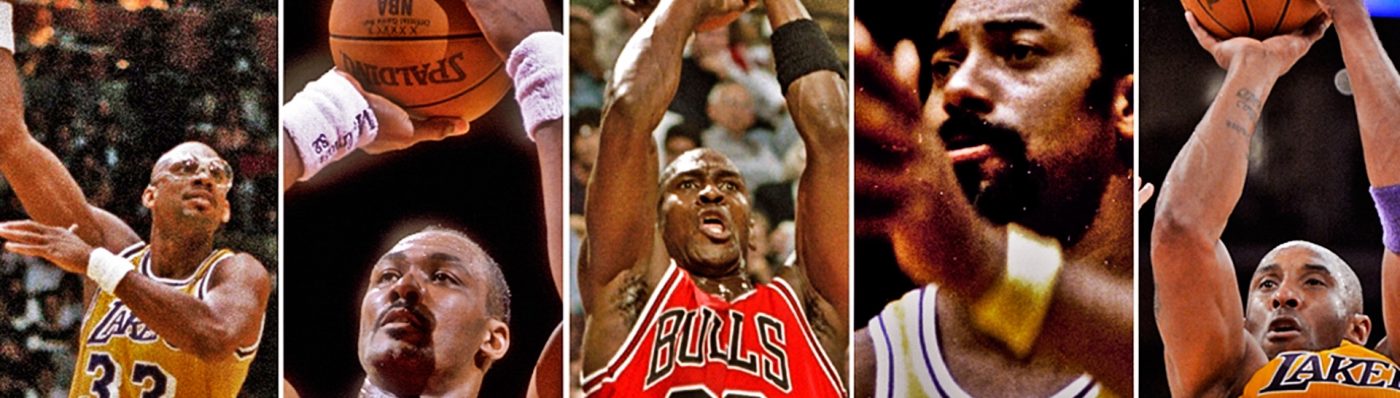
Where will the Spurs turn without Victor Wembanyama?

Where will the Spurs turn without Victor Wembanyama?

Victor Wembanyama’s presence — 7-foot-infinity with arms long enough to box with God, able to block 3-pointers from inside the paint and finish at the rim from outside it — is overwhelming. The challenge now facing the San Antonio Spurs? Finding a way to make sure his absence isn’t.

What was initially diagnosed as calf tightness, sidelining Wembanyama from San Antonio’s Sunday win over the Sacramento Kings, was revealed after an MRI to be a left calf strain. While the Spurs declined to provide a timetable beyond “providing updates as appropriate,” the ailment is expected to sideline the 21-year-old superstar for at least a few weeks …

… and, given how dicey a proposition it can be to play on a strained calf, how precarious lower-extremity injuries can be for a figure as towering as Wembanyama, and how absolutely vital the French phenom’s health is to the Spurs’ present and future, you’d expect San Antonio’s braintrust to err on the side of exercising an exceptional amount of caution when it comes to clearing the big fella to return to the fray.

“Obviously, we’ve seen around this league recently, the calf-tightness thing is not something you want to take lightly,” Spurs coach Mitch Johnson told reporters Sunday. “Don’t want to push it there.”

Two weeks on the shelf would cost Wembanyama seven games. Three weeks would cost him 10. Any more than that — league sources told Tom Osrborn of the San Antonio Express-News that Wemby will be reevaluated in two to three weeks, which isn’t the same thing as saying he’ll be back in two to three weeks — could, for the second consecutive season, cost Wembanyama his eligibility for year-end individual awards like Most Valuable Player and Defensive Player of the Year, as well as recognition on the All-NBA and All-Defensive Teams. (And, if he would’ve gone on to actually win MVP this season, making himself eligible for the 30% max on the rookie-scale extension he can sign this summer, it’d cost him tens of millions of dollars, too.)

Wembanyama ticketed himself for serious consideration on all of those ballots with a sensational start to the 2025-26 NBA season. Entering Tuesday’s play, he ranks 14th in the NBA in scoring, second in rebounding, and first by a mile in blocks per game. He’s on pace to become the third player since the NBA started tracking blocks in 1973-74 to average 25 points, 10 rebounds, 4 assists and 3 swats, joining Kareem Abdul-Jabbar and David Robinson — and he’s scoring more efficiently than those two Hall of Fame legends did.

Big Vic leads the Spurs in minutes, field-goal attempts, free-throw attempts and frontcourt touches per game, and in usage rate, finishing nearly 31% of their offensive possessions with a shot attempt, foul drawn or turnover. He’s the double-team-demanding, game-plan-distorting hub at the center of their 12th-ranked offense; he’s the all-consuming, all-trace-erasing black hole at the dark heart of their fifth-ranked defense.

He is, literally and figuratively, the biggest reason why San Antonio has raced out to a 9-4 start, within just a game of second place in the brutally competitive Western Conference; the Spurs can’t just replace him. So: What can they do?

Can D’Aaron Fox, Stephon Castle carry Spurs?

On offense, the picture starts with shifting more shot-creation and scoring responsibility toward the backcourt, where De’Aaron Fox and Stephon Castle have both gotten off to strong starts.

As my colleague Tom Haberstroh recently noted, reigning Rookie of the Year Castle — who’s been ruled out of Tuesday’s game against the Grizzlies with left hip flexor soreness — has leveled up significantly as a facilitator, ranking 10th in assists (7.5 per game) and 15th in points created via assist (19.5 per game) as he took on a larger role in the Spurs offense with Fox sidelined to start the season. The 6-foot-6 Castle has used his quickness and strength to become a north-south demon, averaging 13.1 drives to the basket per game — just behind All-Stars Paolo Banchero and Donovan Mitchell — taking 40% of his shots at the rim and converting a sparkling 68% of them.

Those repeated paint attacks pay additional dividends in the form of trips to the foul line. Castle’s averaging 6.5 free throws per game, drawing shooting fouls on nearly 22% of his attempts, and has the seventh-highest free-throw attempt rate of any player to take at least 75 shots this season, putting himself in the context of contact magnets like Banchero, Jimmy Butler, Zion Williamson and Luka Dončić. A few more forays into the paint and trips to the charity stripe would go a long way toward helping San Antonio’s offense stay afloat without Wembanyama serving as the tide that lifts all boats.

So, too, would Fox reminding everyone why he earned an All-NBA selection three seasons ago, and why the Spurs gladly handed him a $229 million maximum salaried contract extension over the summer.

Fox has hit the ground running in his first five games since returning from a preseason hamstring strain, averaging 22 points and 6.8 assists in 34.2 minutes per game on pristine 51/38/92 shooting splits. That’s good for a true shooting percentage of .613, which would be far and away the most efficient scoring mark of his career. He’s also doing it on fewer shot attempts, fewer touches, less time of possession and a lower usage rate than he’s had since his first two years in the league.

On one hand, that’s an indication of Fox working to fit comfortably into a (slightly) more circumscribed role as a No. 2 option next to a no-doubt-about-it centerpiece like Wembanyama. On the other, Fox’s strong showing in his first game sans Wemby — a 28-point, 11-assist performance in a win over his old team in Sacramento — offers a reminder that one of just nine players in the NBA to average better than 24 points and six assists per game over the past half-decade is eminently capable of scaling up and shouldering a heavier burden when necessary.

“Sometimes you can be freed of decision-making when you have less options to choose from,” Johnson told reporters after the win over the Kings. “You got the big fella to [keep] happy, when Steph plays [as well], so [Fox] probably could be a little bit more aggressive tonight. Not have to play nice.”

[Get more Spurs news: San Antonio team feed]

While Fox eschews niceness, it’d be nice to see more out of Devin Vassell, too. When playing alongside Wembanyama, the sixth-year swingman slots somewhat quietly into a complementary role, more frequently spacing the floor than getting involved directly in actions; he finishes just 13.9% of San Antonio’s offensive possessions with a shot attempt, turnover or foul drawn when sharing the floor with Wemby. When Wembanyama’s not on the floor, though, that usage rate jumps all the way up to 24.4%, according to PBP Stats — a jump of a couple of spots in San Antonio’s offensive pecking order. (A handy back-of-the-envelope comparison: That’s the difference between, say, the size of Dyson Daniels’ role in the Hawks’ ecosystem, and the size of Jalen Johnson’s.)

While the presence of Fox and Castle — and the impending return of rookie playmaker Dylan Harper, who’s missed seven games with a calf strain of his own and is expected “to return soon after Thanksgiving,” according to Jared Weiss of The Athletic — should help mitigate the loss of Wembanyama on the offensive end, remaining near the top of the league on defense figures to be a tougher task.

What about the defense without Wemby?

San Antonio has allowed just 106.5 points per 100 possessions with Wembanyama on the floor this season, a level of point-prevention that would rank second in the league, better than anybody but the smothering, rampaging Thunder. Without Wemby, though, the Spurs have been significantly more permissive, allowing 123.5 points per 100 — a rate that would rank 28th in the NBA over the full season, ahead of only the basement-dwelling Wizards and Nets.

There’s a caveat there, though. Luke Kornet — the backup center the Spurs targeted in free agency to maintain an elite level of rim protection even when Wembanyama went to the bench — has missed seven of San Antonio’s 13 games. When he’s been available, the Spurs have more than held serve in non-Wemby time: It’s only been 196 non-garbage-time possessions, but with Kornet in the middle and Big Vic on the pine, the Spurs have conceded just 108 points per 100 — again, a top-two-caliber defensive rating — and outscored opponents by 20 points in 92 minutes.

After developing into a key rotation piece and advanced stats darling in Boston, Kornet has been as advertised as an offensive rebounder, finisher and, most importantly, interior deterrent in San Antonio. Kornet is holding opponents to just 47.4% shooting at the rim when he’s the nearest defender — the sixth-lowest mark among 194 players who have contested at least 25 up-close shots, according to Second Spectrum.

“[Kornet] fits our brand of basketball,” Johnson told reporters. “It may look a little different [without Wembanyama], but we don’t have to alter our style of play.”

Johnson will need Kornet to stand tall in Wembanyama’s stead. Just as important: Even factoring in a heavier workload for Kornet than the 23 minutes per game he’s averaged thus far — the 7-2 reserve averaged 27.7 minutes per game in the 16 starts he made for the Celtics last season, and played 28 in his first start of this season against the Kings, scoring 13 points on 5-for-5 shooting, grabbing 11 rebounds and blocking 3 shots — the Spurs will need to find a way to hold fast when the backup-turned-starter sits down, too.

Bismack Biyombo got the bulk of the backup 5 minutes when Kornet was unavailable earlier in the season. They, um, didn’t go so hot — San Antonio was outscored by 26 points in his 46 minutes of work — which is one reason why the recently-returned-to-health Kelly Olynyk got them against Sacramento.

The 34-year-old Olynyk provides a dose of complementary playmaking (eight assists in 18 minutes against the Kings) and floor-spacing (37.1% from 3-point range for his career) that gives San Antonio a different look offensively; he does not, however, offer anything approaching the kind of rim protection that Wembanyama, Kornet or even a 33-year-old Biyombo bring to the table. (He has always had pretty good hands, though, consistently posting strong steal rates for a big man.) It’ll be interesting to see if Johnson feels compelled to push some different buttons tactically in non-Kornet minutes; San Antonio has played 26 possessions of zone defense in 13 games, according to Synergy Sports tracking, 18th among 28 teams that have used any zone at all.

It’ll also be interesting to see if this represents an opportunity for forward Jeremy Sochan — who has seen his minutes and role dramatically reduced after missing the first six games of the season with a sprained wrist — to reestablish his value. The 2022 lottery pick didn’t reach an agreement on an extension of his rookie-scale contract before the season, meaning he’s headed for restricted free agency this offseason. If he can turn in a strong shift as a versatile defensive piece — potentially even serving as a small-ball 5 in place of Biyombo — while continuing to make his 3-pointers, he could reassert his place in San Antonio’s long-term plans … or, failing that, mark himself as a person of interest for another franchise’s future outlook.

While the Spurs went just 13-23 after a blood clot prematurely ended Wembanyama’s second season, this year’s version of the roster looks — on paper, at least — to be better positioned to withstand a few weeks without him. We’ll find out very quickly whether that’s true: After Tuesday’s meeting with the Grizz, San Antonio will host the surging Hawks before going on the road to face the better-than-expected Suns and feisty Trail Blazers, followed by matchups with Nikola Jokić’s Nuggets and Anthony Edwards’ Timberwolves.

Break even there, and you can feel pretty good about staying in the middle of the pack in a crowded West. Slip into a slide, though, and all of a sudden the vaulted, contention-caliber ceiling that looked imminent during those strong opening weeks of the season might start to seem beyond even Wembanyama’s reach.

The High Score 100: The biggest rankings risers and fallers as we navigate Week 5 in fantasy basketball

The High Score 100: The biggest rankings risers and fallers as we navigate Week 5 in fantasy basketball

The High Score 100 — the top-100 players in Yahoo’s newest fantasy basketball format — is a running reflection of year-to-date performance and trending production. Each weekly update captures who’s actually delivering value and who’s fading.

Here’s a breakdown of the biggest risers and fallers through the fourth week of fantasy basketball — with the complete High Score 100 at the bottom of the article. I’ll be updating my rankings every Tuesday throughout the fantasy basketball season.

Before we jump into the rankings movers, LeBron James is expected to make his season debut as soon as Tuesday night. While he’ll be in the High Score 100 next week — giving me a better chance to evaluate his fantasy value in this format — I expect James to average at least 47 points per game in High Score and be a top-20 (or better) player.

[High Score is a new way to play Fantasy Basketball on Yahoo with simple rosters and scoring. Create or join a league]

Ok, onto the risers!

Dillon Brooks – FC, Phoenix Suns: 72nd overall (⬆️ 28)

Brooks moved from 100 to 72 in the High Score 100 thanks to a couple of notable performances in Week 4 that brought his per-game average up to 36 fantasy points in High Score. Brooks has become a strong No. 2 scoring option behind Devin Booker, posting a career-best 22 points per game this season. Brooks isn’t doing much for rebounds or assists, but his scoring and steals have made him a viable utility option in High Score. 

Michael Porter Jr. – FC, Brooklyn Nets: 38th overall (⬆️ 23)

Porter’s offensive output continues to surge in Brooklyn. Through Monday, Porter is putting up 24 points with 3 assists per contest (both career-highs). It may not seem like a lot, but MPJ is doing more facilitating than he’s been tasked with in the past. He’s just outside the top-40 in High Score on a per-game basis, but I have Porter inside the top-40 this week due to his recent run, averaging 44.8 fantasy points per game over his last six games.  

Shaedon Sharpe – G/FC, Portland Trail Blazers: 64th overall (⬆️ 21)

The Most Improved Player race is so deep this year and Sharpe’s fourth-year leap deserves more respect. He’s the Blazers’ second-leading scorer at 22 points per game, plus he’s providing 5 boards and 1.5 steals, a welcome boost that’s paying dividends for fantasy managers. Sharpe jumped into the mid-60s of the rankings after an explosive Week 4, eclipsing 50 fantasy points on two occasions. 

Jalen Johnson – FC, Atlanta Hawks: 13th overall (⬆️ 11)

Johnson’s elevation from rank 24 to 13 highlights his breakout status in Atlanta. He tallied 98 points against the Utah Jazz last week, the second-highest total of the season in High Score. That gem really stamped his Jokić-like ceiling — 31/18/14 with 7 steals. With Trae Young out, his playmaking has grown to the point where he’s flirting with a triple-double nightly. 

Jalen Duren – FC, Detroit Pistons: 37th overall (⬆️ 5)

Moving up five slots isn’t a lot, but I just wanted to highlight how much of a beast Duren’s been lately. Duren’s leveled up to career-bests in scoring, rebounding and stocks, and has logged at least 50 fantasy points in High Score in four of his last five outings. 

The growth in scoring has been just as important as his commitment on the defensive end, and it’s helped the Pistons reel off a 10-game win streak. He’s looking like one of the best frontcourt players in the Eastern Conference.

And onto the fallers…

Jerami Grant – FC, Portland Trail Blazers: Unranked (⬇️ 27)

Grant’s fall from 83 to off the list reflects his drop in production. His scoring has dropped to 18 points per game, and since he doesn’t provide many counting stats outside of that, he’s not someone you need to hold in High Score. All that said, he’s been one of the best reserves in the league this season.

VJ Edgecombe – G, Philadelphia 76ers: 76th overall (⬇️ 24)

Edgecombe’s slide from 52 to 76 mirrors his fantasy value that’s cooled off from his hot start to the season. While he’s still a must-roster player, the rookie has shot just 32% from the field over the past two weeks, averaging 11 points per game. Fortunately, he’s still getting around a combined 10 rebounds + assists but without the scoring, he needs to be on your bench.

Nikola Vučević – FC, Chicago Bulls: 54th overall (⬇️ 14)

The Bulls are playing well, so it’s surprising to see Vučević struggle with the two things he’s been most consistent at — scoring and rebounding. Over the seven games, Vuc’s per-game production tumbled to 12 points, 8 rebounds and 3 assists per night. Fantasy managers are expecting at least a 17-and-10 double-double, so while it’s too early to really dive into the rankings, some concern is valid.

Myles Turner – FC, Milwaukee Bucks: 93rd overall (⬇️ 10)

I finished my latest rankings update before Giannis Antetokounmpo injured his groin on Monday night. Pending the results of Giannis’ MRI, Turner’s stay on the fallers’ list could be short-lived, considering how much Milwaukee will need him if Antetokounmpo is sidelined. 

I’ve been steadily docking Turner each week because he’s barely hanging onto the top 100. He’s averaging 31.4 fantasy points per game, which is 98th overall. 

Collin Sexton – G, Charlotte Hornets: 99th overall (⬇️ 8)

The Hornets dealt with injuries to LaMelo Ball and Brandon Miller early on, which gave the veteran guard more opportunities to step up and fill the void. The Hornets are almost back to full strength, so Sexton’s dip in the ranks is a combination of recent performance (under 30 fantasy points in his last three games) and getting ahead of what’s to come. 

Complete High Score 100 rankings

The High Score 100 is a running reflection of year-to-date performance and trending production.

Note: LeBron James, Jalen Williams and Tyler Herro were excluded from the top-100 because they have yet to play in a game this season.

The Clippers are bad, expensive and owe their first-round pick to the Thunder — now what?

The Clippers are bad, expensive and owe their first-round pick to the Thunder — now what?

Amid all the Western Conference drama — the gambling scandal that rocked the Blazers, the Mavericks firing their general manager, a disgruntled Ja Morant on the Grizzlies, the Pelicans axing their coach and another atrocious start for the Kings — the under-investigation Clippers have begun the season 4-10.

They are bad, tied for the West’s 11th-best record, owners of a -4.6 net rating that has them on pace for a 29-win season. They are one of the NBA’s most expensive rosters and its oldest team by a fairly wide margin. And they owe their first-round draft pick — a potential lottery selection — to, of all teams, the Thunder.

So, where do the Clippers go from here? (On the basketball court, we mean. They have separate issues off the floor, where the league is currently investigating them for, mainly, alleged salary cap circumvention.)

They can bank on the fact that, over the final six weeks of last regular season, they were arguably the conference’s top team, compiling league bests of an 18-3 record and a +13.3 net rating — drawing dead even with the eventual champion Thunder in that span. In the first round of the playoffs, they lost a seven-game series to the Nuggets, who took Oklahoma City to seven games. The Clips were right there.

BOSTON, MASSACHUSETTS - NOVEMBER 16:  James Harden #1 of the LA Clippers looks on during the second half against the Boston Celtics at TD Garden on November 16, 2025 in Boston, Massachusetts. The Celtics defeat the Clippers 121-118. NOTE TO USER: User expressly acknowledges and agrees that, by downloading and or using this photograph, user is consenting to the terms and conditions of the Getty Images License Agreement.  (Photo by Maddie Meyer/Getty Images)
The Clippers are leaning heavily on a 36-year-old James Harden. (Photo by Maddie Meyer/Getty Images)
Maddie Meyer via Getty Images

And they theoretically got better over the summer, trading away Norman Powell in a move that made way for a trade for John Collins and the signings of one-time All-Stars Bradley Beal and Brook Lopez. They were sound decisions, presuming Beal could replace some level of Powell’s production and adding some versatility in the frontcourt around Ivica Zubac. The Clippers were even deeper, at least on paper.

Then, Beal fractured his hip, not that he was any great shakes to begin with. Lopez, a 37-year-old 7-footer, has very much looked his age. And Collins has been who he has been for nine seasons, never quite fitting in as a more traditional power forward. He has not been spacing the floor the way they needed, shooting 33.3% on 2.6 attempts from 3-point range a game, and he cannot keep up with athletic wings on defense.

Collins, like the Clippers, is better in theory than in actuality. They play like a team of individuals, like a team that was bought and paid for by Steve Ballmer, one of the world’s richest men, and like a team that is more concerned with the familiarity of the names on its roster than whether or not they fit together.

They play like a team led by a 36-year-old James Harden, who is still operating as if he is a perennial MVP candidate. Few regulars have a higher usage rate than Harden’s 30.4%, and few teams have so low an assist percentage as the Clippers’ 60.7%. No team runs a greater percentage of its plays in isolation.

This is not a fun way to play. Not when Harden is incapable of carrying the load he did when he was a top-three MVP finisher for four straight seasons from 2017-20. Not when he is a greater defensive liability than ever before. And not when a quarter of the league is throwing 300 passes per game.

The Clippers are easy to solve. Handle Harden, and they will crumble. It is a recipe that has worked in the playoffs every year. And it is easier to handle Harden, in his advanced age, than at any other point ever.

It does not help that Kawhi Leonard is hurt again. He is nursing a sprained ankle and foot injury that has sidelined him for the past eight games, when the Clippers are 1-7. His return from injury, which head coach Tyronn Lue categorized as “nothing serious,” should stabilize an offense rated 21st and a defense that is even worse.

[Get more Clippers news: Los Angeles team feed]

But how long can the Clippers bank on Leonard being healthy? It is the same old Clippers existence, one that they have lived for as long as Leonard has been on the roster. And we are going on seven years now.

Every year we think it is time to write off the Clippers, and every year they pull us back in. As we said, they closed last season on an 18-3 stretch that convinced us they may be bound for another conference finals, where they peaked as a franchise in 2021. We at least figured them as fringe contenders each year.

This year feels different, and not just because they have endured their worst start of the Leonard era. It is impossible to think that, as Harden marches towards his 37th birthday and Leonard is a well-worn 34, they can together find the magic required to win four playoff rounds. Remember, this is James Harden, who, with two chances to defeat the 76ers on the final possession of Monday’s game, missed badly twice.

No, this is a team going nowhere. Fast. Or slow. It has taken awhile for us to get here, but we are definitely here: The Clippers are no longer contenders. They are firmly in the class of pretenders.

And it is not like they can tank to the bottom of the standings, as they do not control their own first-round pick for the next four years, owing the next two to Oklahoma City and two more to Philadelphia.

That lack of draft assets also makes it impossible for the Clippers to enter any serious trade conversations for a superstar. For all the talent the Clippers do have, the Bucks are not about to take Los Angeles’ bloated salaries, without much draft compensation, in exchange for Giannis Antetokounmpo.

More likely, the Clippers would have to assume some risk to make improvements, taking on another team’s trouble. The oft-injured Anthony Davis may soon become available in Dallas. Morant is displeased in Memphis. Atlanta is playing awfully well without Trae Young. The Kings may host a fire sale. And Zion Williamson is floating out there in New Orleans. There is talent to be had if the Clips would take a swing.

But do any of those names inspire confidence that they could solve what ails these Clippers, given how much they would have to give up — likely in a three-team deal — just to acquire any available star player.

No, the Clippers are stuck. And we have barely mentioned the allegations of salary cap circumvention against them, for which they are currently being investigated by the league. That is but one of their problems now. The Clips are the Clips again, their outlook in the standings as dire as it is for the future.

Early NBA All-Star picks: How Team U.S. and Team World rosters could look

Early NBA All-Star picks: How Team U.S. and Team World rosters could look

We’re roughly a month into a wild, wacky, and ultimately entertaining NBA season. We’ve had the usual blend of fun: dominance at the top (hi, Oklahoma City), a star-studded MVP race, an intriguing rookie class, plenty of overtime thrillers, breakout stars, and where-did-you-come-from team performances — the Hawks, Raptors, and Suns seem to be prime candidates right now.

We recently got word of this year’s new All-Star format, yet another round of tweaks as the NBA at large tries to find a way to recapture some of the magic — and overall interest — of the past. This year will see the introduction of a Team USA vs. Team World format, but with a bit of a twist.

[High Score is a new way to play Fantasy Basketball on Yahoo with simple rosters and scoring. Create or join a league]

  • There will be three teams of eight players (24 total, no positional limit) involved in a round robin mini-tournament. Among the player pool, 12 must come from each conference.

  • The teams will play each other once — Team A vs. Team B, the winner facing Team C in the second game, then the loser of Team A vs Team B facing Team C in the third game — with each game consisting of a 12-minute period.

  • The top two teams will play each other in the championship game. If the initial three games end with each team having a 1-1 record, the tiebreaker will be the overall point differential.

I ultimately don’t mind the attempt, though I have some history-keeping and back-of-the-roster questions in the event that Adam Silver has to fudge things to make sure there are eight international players on Team World.

MILWAUKEE, WISCONSIN - NOVEMBER 15: Luka Doncic #77 of the Los Angeles Lakers defends Giannis Antetokounmpo #34 of the Milwaukee Bucks during the first quarter at Fiserv Forum on November 15, 2025 in Milwaukee, Wisconsin. NOTE TO USER: User expressly acknowledges and agrees that, by downloading and or using this photograph, User is consenting to the terms and conditions of the Getty Images License Agreement. (Photo by Patrick McDermott/Getty Images)
Team World will likely feature Giannis Antetokounmpo and Luka Dončić. (Photo by Patrick McDermott/Getty Images)
Patrick McDermott via Getty Images

For the actual games, is a 12-minute stretch enough of a sweet spot for players to catch a rhythm and give an acceptable level of effort — the real issue with All-Star festivities the last few years — without risking injury? I guess we’ll find out.

With a decent sample of games in the books, I thought it’d be fun to take an early look at what the player pool could look like. A couple of notes before we get rollin’ and scrollin’:

  • While there isn’t an official game played minimum for All-Star festivities, I personally use it as a consistent guardrail since I’m keeping tabs for award selections anyway. A 65-of-82 limit comes out to roughly 79% of games played; the league average for games played right now is about 13, meaning players would need to have appeared in at least 10 contests for me through Nov. 16. That’s the primary reason you won’t see Anthony Edwards (9 games), Bam Adebayo (8), LaMelo Ball (7) and others.

  • After getting the 24, I tried my best to split it into Team East, Team West, and Team World. There were ultimately more Team World representatives from the West than the East, so I did my best to do a little balancing. I can’t wait to see how the NBA splits or drafts things once we get to February.

  • Because it’s me, there will be honorable mentions. And be aware that this is ultimately my abbreviated list. I don’t hate your favorite team or your favorite player (non-legal issue division), I promise.

Let’s dig in, shall we?


EASTERN CONFERENCE REPS (* denotes Team World member)

Giannis Antetokounmpo* (MIL): 32.6 points (64/50/64 shooting splits), 11.3 rebounds, 7.1 assists, 0.9 steals, 1.1 blocks

There’s been more on the plate of Giannis this season, which has led to career highs in points and assists — and, quietly, more per-possession inconsistency on defense than you’d like. Still, this is the best player in the East — and the most doubled player (26.2% of touches) in the league to this point — that can take over games on both ends when fully locked in.

Scottie Barnes (TOR): 19.7 points (54/41/81), 7.8 rebounds, 5.2 assists, 1.5 steals, 1.8 blocks

The Raptors are currently one of four teams with a top-10 ranking in offensive and defensive rating per Cleaning The Glass, with Barnes — sometimes literally — at the center of both. He’s oscillated between playmaking hub, screener (please make more contact), post threat, transition menace on offense. He’s been tasked with a little bit of everything defensively, with his off-ball exploits popping at an All-Defense level right now.

Jaylen Brown (BOS): 27.4 points (57/34/77), 5.6 rebounds, 4.1 assists, 0.8 steals

Brown has answered “How will he look without Jayson Tatum?” questions with, narrowly, the most efficient season of his career (58.7 true shooting) to this point of the season. He’s gotten buckets from just about everywhere, but it’s worth noting he’s been bonkers in the midrange — 49% per Cleaning The Glass.

Jalen Brunson (NYK): 28.0 points (52/37/86), 3.5 rebounds, 6.5 assists, 0.8 steals

Brunson has enjoyed the tweaks to the offense, more often getting to attack on the second side of actions and making quicker, still-fruitful decisions because of it. For a quick example: He’s having the best catch-and-shoot season of his career, draining 50% of his career-high 3.1 attempts from deep within that context.

Cade Cunningham (DET): 27.5 points (50/29/80), 5.4 rebounds, 9.9 assists, 1.4 steals, 0.8 blocks

Cunningham is at the forefront of the East-leading Pistons, providing his usual blend of at-my-rhythm drives and playmaking chops. The efficiency is down, though he’s dealt with some spacing-deprived defensive lineups and more defensive attention. He’s seen a second defender on nearly 19% of his touches, the fifth-highest mark in the league among 138 players to log at least 500 touches.

Jalen Duren (DET): 19.4 points (64.7% on 2s, 80.8% on FTs), 12.0 rebounds, 1.6 assists, 1.1 steals, 1.2 blocks

Tag-teaming with Cunningham to produce the most voluminous ball-screen pairing in the league (209 picks, only duo over 200), Duren has been a legitimate two-way game changer. He’s setting bone-crushing picks, cleaning the glass, providing real juice as a scheme-versatile defender, and (literally) flashing mid-possession playmaking chops to keep the half-court offense moving. That brother’s getting paid this summer, and rightfully so.

Josh Giddey* (CHI): 21.9 points (49/37/77), 9.9 rebounds, 9.7 assists, 1.1 steals

The feel-good shine for the Bulls has all but run out; after a 5-0 start, they’ve lost six of their last seven games. If there’s good news to be had, it’s that Giddey’s second-half surge from last season has carried over into this one. His intuitive and daring passing continues to juice Chicago’s transition attack and overall productivity in the paint. His drives have become more physical, a welcome growth area for him. He is still hitting 3s, and has gotten friskier with his off-the-dribble attempts.

Jalen Johnson (ATL): 21.8 points (64/38/81), 9.6 rebounds, 6.3 assists, 1.8 steals

Since Trae Young went down with a knee injury, Johnson has stepped up: 22.4 points (63/46/78), 10.9 rebounds, 7.4 assists, 1.9 steals and a 6-2 record in the games he’s appeared in. In addition to remaining an elite transition scorer, Johnson has taken more ownership of the half-court offense as a ball-screen initiator and occasional hub. He was playing at an All-Star level last season before getting injured; hopefully he gets to cash in this season.

Tyrese Maxey (PHI): 32.0 points (48/42/88), 5.1 rebounds, 7.8 assists, 1.4 steals, 0.8 blocks

It may just be time to call this Maxey’s team. Career highs across the board speaks for itself, but the command Maxey has displayed has popped off the screen all season long. His driving prowess and 3-point shooting remains in abundance; the growth in playmaking and floor-manipulation, and some of the shot-hunting he’s done in the midrange has made him incredibly difficult to deal with.

Donovan Mitchell (CLE): 30.4 points (62/38/83), 4.6 rebounds, 5.4 assists, 1.5 steals

It’s been an uneven season for the [checks notes] third-seed Cavaliers, but Mitchell has been phenomenal. Despite teams working hard to take away his paint touches — he’s seeing help on nearly 83% of his drives, a top-10 mark among high-volume drivers this season and a major step up from last year’s 75.2% clip — he’s been windmill-gathering his way into a bevy of touch shots and tough finishes at the rim. He remains an unconscious pull-up threat from beyond the arc, making him one of the most dynamic guards we have in the league.

Norman Powell (MIA): 26.1 points (48/48/93), 4.1 rebounds, 2.4 assists, 1.2 steals

A pleasant surprise, Powell has built on his fringe All-Star campaign from last season. He’s been an absolute rocket for the Heat this year; his blistering start from beyond the arc — he’s been the best 3-point shooter in the league among 32 players to take at least 7.0 per game — and quick-twitch drives have been necessary within Miami’s open season offensive attack.

Karl-Anthony Towns (NYK): 21.8 points (49/35/90), 12.5 rebounds, 3.3 assists, 1.0 steals, 0.9 blocks

It took Towns a little bit to adjust to New York’s offensive tweaks; it also took head coach Mike Brown some time to figure out the right blend and rhythm of Towns’ touches. It’s looked much better as of late; the Knicks are 6-1 over their last seven, with Towns averaging 24-12-4 on 61.1 true shooting.

Honorable mentions

Franz Wagner* (ORL): 23.1 points (51/36/83), 6.3 rebounds, 3.9 assists, 1.1 steals

Paolo Banchero (ORL): 21.7 points (53/25/77), 8.7 rebounds, 4.1 assists, 0.8 steals, 0.9 blocks

The Orlando contingent will be important to watch moving forward, especially since they should both (technically) have eligibility for Team World if it comes down to it. I’ve enjoyed some of the shot profile refinement (read: soooo many more drives and free throws) from Banchero; the early transition seals and general downhill juice from Wagner continue to excite me.

Evan Mobley (CLE): 19.2 points (52/36/63), 9.0 rebounds, 4.2 assists, 1.3 steals, 1.6 blocks

Mobley’s averaging career highs in points, assists and steals, but it hasn’t felt that way. Similar to Mitchell, he’s seen an uptick of attention on his drives (51.9% help rate to 60.7% this year) and has leaned more on his jump shooting to counter. While he hasn’t been quite DPOY-level for me to start the year, he remains incredibly good on that end. It wouldn’t surprise me, nor should it shock anyone, if the Cavs find their footing and Mobley feels like more of a sure thing a few weeks from now.

Pascal Siakam* (IND): 24.6 points (49/36/66), 7.1 rebounds, 5.1 assists, 1.2 steals

It’s not his fault that the Pacers have essentially been an infirmary. I just want to note that, even within this context, Siakam has been a tough cover on all three levels. Please stay healthy, and please start making your free throws, brother.

Alex Sarr* (WAS): 18.3 points (52/35/74), 8.2 rebounds, 3.6 assists, 2.2 blocks

We’ll just say it hasn’t been a great year for the Wizards, but Sarr has undoubtedly been their best story — with respect to Kyshawn George’s start to the season. Sarr feels more refined as a screener, roller, and finisher. His playmaking continues to pop when they allow him to make above-the-break decisions. The rim protection remains a fun feature of his game; I wish he had more consistency in front of him so his talents would really pop on that end.


WESTERN CONFERENCE REPS (* denotes Team World member)

Devin Booker (PHX): 28.4 points (56/34/90), 4.1 rebounds, 7.0 assists, 0.8 steals

Sunday night’s loss to the Hawks bumped the Suns to 12th in defensive rating, so they’re no longer one of the top-10-on-both-ends teams, but they’ve been a real joy to watch. At the head of the snake is Booker, having the best scoring season of his career while handling an ungodly amount of traps in the process.

Stephen Curry (GSW): 27.4 points (57/38/93), 3.7 rebounds, 3.7 assists, 1.4 steals

Ask the Spurs: Curry’s still got it when he needs it. It feels odd to say Curry is slumping from deep when he’s converting at a 38% clip on over 11 attempts, but that’s the standard he’s set. Beyond that, he remains an electric scorer at all three levels, a dangerous screener, and an underrated playmaker (despite the assist numbers) because of the attention he commands.

Luka Dončić* (LAL): 34.4 points (60/33/79), 8.9 rebounds, 8.9 assists, 1.7 steals

There already isn’t much you can do with Dončić; that blend of size, playmaking, and scoring audacity is historically rare. When he’s making darn-near everything inside of, like, 12 feet, there really isn’t anything you can do with him.

Kevin Durant (HOU): 25.9 points (55/40/89), 4.7 rebounds, 3.4 assists, 1.0 steals, 0.7 blocks

Durant remains metronomic as a scorer; did you know he’s on pace for his 14th straight season with a true shooting clip over 60? It’s absurd. The Rockets have moved him around as an off-ball threat, initiator, screener and, if all else fails, a late-clock security blanket. It isn’t always the cleanest process (I won’t apologize), but he’s largely delivered.

Shai Gilgeous-Alexander* (OKC): 32.6 points (59/37/90), 5.1 rebounds, 6.6 assists, 1.4 steals, 0.9 blocks

How on earth did this dude get better despite not playing a second with Jalen Williams yet? SGA has established a different level of command in the half-court. He’s averaging a career high in assists and a career low in turnovers (1.6 per game, 6.2 turnover rate). He has the highest rate of unassisted baskets in the league and is still logging the most efficient season of his career (65.2 True Shooting).

James Harden (LAC): 26.0 points (53/40/91), 6.3 rebounds, 9.0 assists, 0.9 steals

Harden logging the first 40-point triple-double in franchise history, and still coming away with a loss, feels like a microcosm of the season so far. Harden’s been a monster: an elite driver (1.12 PPP), playmaker, and shot-maker for a Clippers group still looking for some semblance of consistency.

Nikola Jokić*, Denver Nuggets: 28.7 points (77/43/88 shooting splits), 13.0 rebounds, 10.9 assists, 1.8 steals, 0.8 blocks

An absolute no-brainer. He’s been the league’s best player and, due to his play and usage, virtually impossible to guard. He doesn’t miss inside the arc, he’s hitting 3s at a high clip, and he’s arguably the best passer in basketball. More quietly, he’s more than held his own as part of Denver’s scheme-versatile, third-ranked defense. Here’s a fun one: opponents are generating 0.88 points per possession on trips featuring a ball screen defended by Jokić, sixth, a hair ahead of Victor Wembanyama, among 28 players to defend at least 200 so far.

Lauri Markkanen* (UTA): 30.6 points (55/39/88), 6.2 rebounds, 2.1 assists, 0.9 steals

Talk about a bounce back season! Markkanen has been monstrous to start the year, an always-moving cog within Will Hardy’s screen-heavy offense. The shooting prowess should be well-known at this point, but Markkanen’s become a nastier driver this year. I don’t know how sustainable 30-a-night is, but he looks like a different dude. I’ve enjoyed it.

Julius Randle (MIN): 25.5 points (61/39/87), 7.4 rebounds, 6.2 assists, 1.3 steals

Somewhat similar to the Cavs out East, the Wolves have had to find themselves in the midst of injury woes, guard inconsistency, and teams looking to attack them in different ways. The constant this year, in a pleasant surprise, has been Randle. The blend of bully drives — among 64 players to log 100 drives, Randle leads the NBA in points per possession generated (1.3) — pull-up shooting, off-the-bounce playmaking and occasional hub work has led to his most prolific and efficient season to date. In light of this, the Wolves have predictably died whenever he’s gone to the bench.

Austin Reaves (LAL): 28.3 points (61/33/87), 5.1 rebounds, 8.2 assists, 1.4 steals

Also in the “he’s gonna get paid” division, Reaves has leveled up as a scorer and playmaker. He took off with the runway provided in the absence of Dončić and the yet-to-play LeBron James, and it feels like the only thing that can stop him from maintaining this level of play is lingering effects of the groin injury that took him out of four games. Keep an eye on his work between, say, 7-to-14 feet. His mix of shot-making and foul-drawing has had defenses in the blender all year long.

Alperen Şengün* (HOU): 23.0 points (49/45/74), 10.3 rebounds, 7.4 assists, 1.3 steals, 1.0 blocks

I have really enjoyed the Şengün Experience. The awkward cadence of his drives, the fancy footwork, the audacious passes, the freedom with which he’s pulling from deep. The pick-and-roll reps as the ball-handler, his growing nuance and comfort defensively; it’s all popping for me. He’s firmly been Houston’s best and most impactful player this year — a huge sign of respect considering the Hall of Famer he’s playing with.

Victor Wembanyama* (SAS): 26.2 points (56/35/86), 12.9 rebounds, 4.0 assists, 1.1 steals, 3.6 blocks

We’ve never seen anything like this. Every night, there’s a what-the-heck block, a coast-to-coast possession, a dunk, a stepback three, something that defies conventional wisdom. He’s the league’s most terrifying defender, and this is with him still actively working on the nuances of coverages. While teams have had some success throwing junk defenses and double teams at him, Wembanyama has still been an effective scorer and playmaker that can bend a game to his will. It’s going to get better from here, somehow.

Honorable mentions

Deni Avdija* (POR): 26.0 points (56/38/86), 6.5 rebounds, 4.8 assists, 0.8 blocks

Only SGA (256) has logged more drives than Avdjia (223), and Avdija is quietly generating more efficient offense on those possessions (1.12 PPP to 1.11 PPP). In addition to his downhill attacks, he’s continued to put fun (and sometimes wild) passes on film while becoming more shot-hunty beyond the arc (career-high 6.8 attempts). It’s about to be a three-year sample of Avdija knocking down 3s at a high clip; this may just be him now.

Jimmy Butler (GSW): 19.1 points (54/47/86), 5.4 rebounds, 4.8 assists, 1.6 steals

Butler has fit in smoothly since joining the Warriors last season. Strong driver, smart passer, intuitive cutter, willing screener, and heady off-ball defender when fully locked in — that all plays within the Golden State ecosystem. As is generally the case with the Regular Season Butler Experience, you’d like more consistent aggression from him as a scorer, but it’s been a good season overall.

Stephon Castle (SAS): 17.3 points (62/24/69), 5.8 rebounds, 7.5 assists, 1.7 steals

Sans 3-point and free throw shooting, both below what you’d like from a guard or wing (in their context, anyway), there really hasn’t been much to poke at in regards to Castle. His interior craft continues to pop — his cadence, footwork, and late-passing is a joy to watch. He’s once again taken on some tough defensive matchups on the perimeter and largely held his own. Incredibly fun player.

Aaron Gordon (DEN): 19.9 points (58/47/89), 5.9 rebounds, 1.5 assists, 0.9 steals

Gordon’s been an important part of Denver’s post-heavy attack, his transition seals and random corner duck-ins causing early clock problems for defenses. Beyond that, this dude is shooting the leather off the ball. Shooting this well, making your own dinner within the flow of the offense, and also benefiting from the passing of Jokić with cuts and dunker spot roaming, and solid multipositional defense makes for an interesting All-Star case.

Chet Holmgren (OKC): 19.3 points (68/39/87), 8.2 rebounds, 1.8 assists, 0.7 steals, 1.3 blocks

To be transparent, this was my toughest omission. It ultimately came down to two things. He’s missed time — four missed games and dealing with the Blowout Tax put him slightly behind in terms of total and per-game production — and his defense, while still excellent at the high-end, has been a little below his usual level. His pick-and-roll and rim protection numbers are notably sub-elite, though I expect that to round into form as the season goes on. Still, Holmgren has been phenomenal when available. His 3-point shooting is an obvious positive, but I’ve really enjoyed his midrange scoring this year. Having something he can consistently rely on in the half-court was really the only thing somewhat missing in his game.

Jaden McDaniels (MIN): 17.7 points (57/50/85), 4.5 rebounds, 2.3 assists, 0.9 steals, 1.3 blocks

Whew, buddy, the leap may be happening. I don’t think he sustains 50% shooting from deep, but reliable spot-up shooting and this amount of drives and midrange buckets should be enough to raise some eyebrows. He has had the ball in his hands more and hasn’t looked completely out of place. And of course, his defense remains nasty — even if it’s been more uneven against guards than we’re used to.

Jamal Murray* (DEN): 22.1 points (53/34/93), 5.1 rebounds, 6.3 assists, 1.4 steals

It normally takes Murray a bit to find his rhythm during the regular season. Him coming out of the gates on fire has been a pleasant and welcome surprise. As my esteemed cohost Steve Jones always says, you can tell if Murray’s feeling it by the look (and volume) of his drives; among that 64-player group with at least 100 drives, Murray ranks 8th in points per possession generated (1.17 PPP) to start the year.


Here’s an early look at what the rosters (and positional groupings, if you care) could look like as of today.

TEAM WORLD

Guards: Shai Gilgeous-Alexander

Wings: Luka Dončić, Josh Giddey

Forwards: Giannis Antetokounmpo, Lauri Markkanen

Bigs: Nikola Jokić, Victor Wembanyama, Alperen Şengün

TEAM USA 1

Guards: Stephen Curry, Tyrese Maxey, Devin Booker

Wings: Austin Reaves, Jaylen Brown

Forwards: Scottie Barnes, Julius Randle

Bigs: Karl-Anthony Towns

TEAM USA 2

Guards: Donovan Mitchell, Jalen Brunson, James Harden

Wings: Cade Cunningham, Norman Powell

Forwards: Kevin Durant, Jalen Johnson

Bigs: Jalen Duren

So … how's that Washington Wizards rebuild going?

So … how's that Washington Wizards rebuild going?

Losing, in and of itself, isn’t that big a deal for the Washington Wizards.

For one thing, it’s something they’ve done quite a lot of over the past few years. The Wiz haven’t even approached .500 since 2017-18, a span in which they’ve lost a higher percentage of their games than any franchise except the Pistons. While Detroit is now firmly on the upswing, though, Washington remains mired in the mud — which, for another thing, is kind of the plan for an organization that is still climbing out of the smoking crater left in the wake of the John Wall/Bradley Beal era and boasts the NBA’s youngest roster.

Losing 11 games in a row, though? With the 11th coming in a game where you trailed for virtually the entire final three quarters … going down by as many as 24 points … to the similarly disastrous and previously 1-11 Brooklyn Nets … at home?

Well, that’s a sizable enough deal that, just a baker’s dozen games into the 2025-26 NBA season, the nigh-upon-winless 1-12 Wizards sounded a worrying alarm:

From Josh Robbins of The Athletic:

“We buckled to the adversity,” coach Brian Keefe said. “We fouled when we shouldn’t. We didn’t dig in when they made certain runs. This group has never done that. That was disappointing on all of our end. We have to own that. But that was the thing that was bothering me the most, is that after the initial start of the game, which I thought we came out with a necessary mindset and attitude, once we got hit, we didn’t respond well.”

It was a bad enough performance that, after Keefe spoke to the team following the final buzzer, the Wizards held a players-only meeting in their locker room.

“We needed that talk, I think,” [Wizards forward Bilal] Coulibaly said afterward. “The guys just stepped up, the vets, the guys that have been used to winning. That’s what we’re trying to do here in the next year. So they had to talk to us, and they did a great job about this and everybody was listening.”

That, in part, was the argument for the Wizards trading for the likes of Khris Middleton and C.J. McCollum. Bringing in a pair of respected 10-plus-year veterans who have been on teams of consequence — in Middleton, a three-time All-Star who played a key role on the Bucks’ 2021 NBA championship team; in McCollum, someone who’d averaged 20 points per game for 10 straight seasons and went to the 2019 Western Conference finals with Portland — would help Keefe and his coaching staff show the ropes to Washington’s 10 players aged 22 and under. Under their guidance, hoped-for cornerstones like Coulibaly, Alex Sarr, Kyshawn George, Bub Carrington and Tre Johnson would come to understand what it takes to travel the road to NBA relevance: to transform from the team every opponent can’t wait to face to one worthy of respect.

In the third season after dealing Beal, though … it’s proving to be an awfully long road.

After the embarrassing loss to Brooklyn, the Wizards enter Monday’s action ranked 28th in offensive efficiency, 29th in defensive efficiency and 30th — dead last — in net rating, according to Cleaning the Glass. They are woeful in the half-court, whether scoring or defending. They are even worse in transition, ranking 28th in points per 100 possessions added on offensive fast breaks and 30th — again, dead last — in points-per-100 added by opponents on their transition chances. They’ve been able to limit 3-point attempts, ranking sixth in the share of opponents’ shots that come from long distance … but have been unable to prevent the most efficient shots in the game, with opponents taking nearly 34% of their attempts directly at the rim, fifth highest in the NBA.

In an era when it seems like every head coach in the league is harping on the importance of winning the possession battle, the Wizards are losing it, night in and night out, to an almost unfathomable degree. They give up more offensive rebounds than they snag themselves; they allow more free throws than they generate for themselves; they turn the ball over way more often than they take it from the other team. Add it all up, as Jared Dubin does at Last Night in Basketball, and Washington is averaging 11.4 fewer possessions per game than its opponents — a deficit nearly twice as large as that of the team with the second-largest disparity (Milwaukee, -6.1).

WASHINGTON, DC - NOVEMBER 16: Corey Kispert #24 of the Washington Wizards celebrates with Bilal Coulibaly #0 and Khris Middleton #22 during the first half against the Brooklyn Nets at Capital One Arena on November 16, 2025 in Washington, DC. NOTE TO USER: User expressly acknowledges and agrees that, by downloading and or using this photograph, User is consenting to the terms and conditions of the Getty Images License Agreement. (Photo by Scott Taetsch/Getty Images)
Moments to celebrate have been few and far between for Corey Kispert (center), Bilal Coulibaly, Khris Middleton and the Washington Wizards. (Photo by Scott Taetsch/Getty Images)
Scott Taetsch via Getty Images

As it turns out, giving opposing teams way more scoring chances than you get, struggling to convert on yours and not being very good at preventing them from scoring on theirs is a one-way ticket to Yikesville. According to Dubin’s adjusted efficiency metrics, the Wizards’ offense has scored about six fewer points per 100 possessions than a league-average unit this season, and their defense has allowed about seven more points-per-100 than a league-average outfit. That adds up to an adjusted net rating of -13.4 points-per-100 — which would be the third-worst season of any team since the ABA-NBA merger in 1976, ahead of only the 1992-93 Dallas Mavericks, who finished 11-71, and the 2011-12 Charlotte Bobcats, who finished 7-59 in a lockout-shortened campaign.

Those teams finished with two of the five worst winning percentages in NBA history. That’s the deep water in which the Wizards have plunged — and, just a month into the season, it sure looks like they’re on the verge of staying sunk.

For now, at least. There have been silver linings: George’s growth as a playmaker and shooter; Sarr’s improving finishing on the interior and rising rebounding, block and assist rates; lottery pick Johnson’s instant-impact bucket-getting and high-volume 3-point shooting. Those players continuing their development into better, more well-rounded players is of incalculably greater importance to the Wizards’ future than an extra win or two here or there this season — especially considering Washington owes its 2026 first-round draft pick to the Knicks, but only if it falls outside the top eight after the draft lottery.

(That pick, originally dealt to Houston in the 2020 trade that shipped out Wall and imported Russell Westbrook, wound up going to Oklahoma City in the 2021 swap that made Alperen Şengün a Rocket. It then landed in New York via the 2022 draft-night deal that allowed the Thunder to draft Ousmane Dieng … and helped the Knicks clear the salary-cap space to sign Jalen Brunson away from Dallas in free agency. Trades involving future draft picks: They really turn you into Charlie trying to track down Pepe Silvia.)

The way to ensure there’s no chance of handing Leon Rose a late lottery pick is to finish with one of the four worst records in the NBA. (If it doesn’t land in the top eight, the Wiz only owe New York two future second-rounders. Much better.) If the Wizards do that and wind up drafting a prospect like Darryn Peterson, Cameron Boozer or AJ Dybantsa to join Sarr, George, Johnson and Co. — and if Wizards brass is able to turn the expiring contracts of Middleton and McCollum into future talent, either before February’s trade deadline or this summer, when Washington could be looking at more than $100 million in salary-cap space — then someday all the sturm und drang of this dismal “early phase of the rebuild” will dissipate and feel like little more than a bad dream.

Living through it in the moment, though, must feel like a nightmare — for Keefe, who waited the better part of two decades for his shot at a head coaching gig, only to lose 80% of his first 134 games; for the vets, stuck doing a bid on a going-nowhere team and waiting for some interested suitor to swoop them up and return them to meaningful basketball; and especially for the young guys, watching the L’s pile up and wondering if they’re ever going to reach the light at the end of the tunnel.

“It’s tough,” George told reporters. “You’ve got to switch your mindset and focus on the process. I think it eventually is going to affect you, but you’ve got to make sure that you keep your mindset focused on the right thing. We’ve just got to be able to go on to the next game and be able to just make sure the process is right, even though the results are not there.”

NBA PER (Week 4): Nikola Jokic Ranks 1st At 37.7

NBA PER (Week 4): Nikola Jokic Ranks 1st At 37.7

Nikola Jokic has overtaken Giannis Antetokounmpo for the top spot in the NBA in PER with a mark of 37.7. Jokic has a TS% of .769 to go with his league leading 52.5 assist percentage. Shai Gilgeous-Alexander, Luka Doncic and Jalen Duren round out the top-5. Jokic has led the NBA in PER each of the past five seasons.

NBA PER (Week 4):
1. Nikola Jokic: 37.7
2. Giannis Antetokounmpo: 34.2
3. Shai Gilgeous-Alexander: 32.3
4. Luka Doncic: 29.1
5. Jalen Duren: 26.1
6. Victor Wembanyama: 25.4
7. Julius Randle: 25.1
8. Kawhi Leonard: 24.8
9. Anthony Edwards: 24.4
10. Donovan Mitchell: 24.4
11. Austin Reaves: 23.8
12. James Harden: 23.5
13. Jimmy Butler III: 23.4
14. Joel Embiid: 23.2
15. Tyrese Maxey: 23.1
16. Jalen Johnson: 22.9
17. Lauri Markkanen: 22.6
18. Stephen Curry: 22.4
19. Alperen Sengun: 22.2
20. Moussa Diabate: 22.1

Paul George expected to make season debut for 76ers Monday night vs. Clippers

Paul George expected to make season debut for 76ers Monday night vs. Clippers

After missing all of training camp and the first dozen games of the season following offseason knee surgery, Paul George is expected to make his return to the court Monday night when the 76ers host the Clippers.

George is officially listed as questionable, however, he is expected to take the court, reports Shams Charania of ESPN. George has been working out on the court for a month and looked good in post-practice work, according to reports, but the 76ers were cautious with the return of the 35-year-old.

George played 41 games in his first season with Philadelphia, largely due to a knee issue, which is why he underwent arthroscopic surgery this past summer. Last season, the six-time All-NBA player averaged 16.2 points and 5.3 rebounds per game when he did play. However, the season before, in Los Angeles, he was an All-Star, averaging 22.6 points per game and shooting 41.3% from 3-point range.

While George is set to return, the 76ers are listing Joel Embiid, Kelly Oubre Jr., and Adem Bona as out. The Clippers will be without Kawhi Leonard, Bradley Beal (out for the season), and Derrick Jones Jr. against the 76ers.

Sources: Bulls’ White (calf) set to debut vs. Jazz

Sources: Bulls’ White (calf) set to debut vs. Jazz

Bulls guard Coby White is expected to make his season debut against the Jazz, sources told ESPN’s Shams Charania. White has missed Chicago’s first 11 games with a calf strain.

Best DFS picks for Eagles vs Lions in Week 11

Best DFS picks for Eagles vs Lions in Week 11

The 6-3 Detroit Lions head to Philadelphia to take on the 7-2 Eagles in a battle of two division leaders on Sunday Night Football. Both teams have plenty of high upside fantasy players going, but as usual, we can’t fit them all into a DFS lineup.

The Lions do have one significant injury, as TE Sam LaPorta will miss this week with a back problem. But otherwise, we have a slew of strong fantasy plays beginning with both starting quarterbacks, two running backs, four wide receivers and one tight end and then we start looking for cheaper plays to try to fit some of those guys in.

Below we will take a look at the best DFS plays for this Sunday night showdown.

Captain’s Picks

Jameson Williams, WR, Lions (FLEX $8,200, CPT $12,300)

Head coach Dan Campbell has looked to get Williams going following the break and so far so good. And when Campbell took over play calling duties last week, we saw an even bigger jump for Williams. Quarterback Jared Goff called Williams’ crossers a cheat code, and we know what he can do with the ball in his hands. He’s suddenly become a safer play, while still having a sky high upside.

AJ Brown, WR, Eagles (FLEX $9,200, CPT $13,800)

Brown is so down about his role in the offense that he’s got the whole organization working to keep him happy this week. His wheels are certainly squeaky, and I don’t see how the team doesn’t try to grease them with a slew of targets early on in this matchup. The good news is that Brown has shown good upside this season, so it isn’t like he’s not capable of putting up big numbers, it’s just not as consistent as usual. They need him and they need that connection to be more consistent, especially in games like this one. I expect if he doesn’t have a big fantasy game, it won’t be for a lack of trying.

Jalen Hurts, QB, TEAM (FLEX $13,000, CPT $19,500)

Hurts is the most expensive play at FanDuel, which makes him tough to roster at the captain’s slot. The good news is that should also make him a little contrarian there. If he goes off, he should pay off. And this is a game where he will need to go all out as both a runner and passer, as the Lions offense can put up points in a hurry. We’ll need a rushing touchdown or two from Hurts for him to pay off as a captain, but that is always a strong possibility, especially in primetime games against top teams.

Value flex plays

Dallas Goedert, TE, Eagles (FLEX $7,600, CPT $11,400)

The Eagles are healthy and don’t use their backups all that much. RB Will Shipley has some DFS appeal, but I’m leaning more toward the Lions ancillary players to see upticks with LaPorta out when looking for savings. Goedert is the cheapest Eagles player that I’d still be okay rostering in this matchup. And, in FanDuel scoring, his touchdown prowess over big reception numbers is a plus.

Isaac TeSlaa, WR, Lions (FLEX $2,600, CPT $3,900)

Teslaa saw an uptick in snaps last week and has shown ability in very limited work so far this season. With LaPorta out, I expect TeSlaa to continue to see more snaps and work and have a real shot at giving us value this week in a game I expect will hit the over.

Brock Wright, TE, Lions (FLEX $2,200, CPT $3,300)

Wright is questionable with an ankle injury for this matchup, but it sounds like he’ll probably play. He is LaPorta’s direct backup and will get the lead role at tight end as long as he’s a go. His upside is low, but as the lead tight end, he has a real shot at a touchdown in this matchup.